
Using historical statistics to study the history of the Republic of Estonia
Author: Hiljar Tammela
Statistics are produced in order to understand the present and plan for the future. This sometimes means taking a look back at recent years, for example, by including statistics on the last decade to illustrate the trends. But might there be any use for statistics from a hundred or two hundred years ago – considering that the situation and circumstances have fundamentally changed?
Yes, there might, because the statistics once produced as a snapshot of the present can be used by today’s historians to make sense of the past. Narrative texts (letters, minutes, memoirs etc.) have always been the preferred source for historians, but statistical data have probably been used for historical research ever since the first numerical data became outdated, thereby becoming part of history.
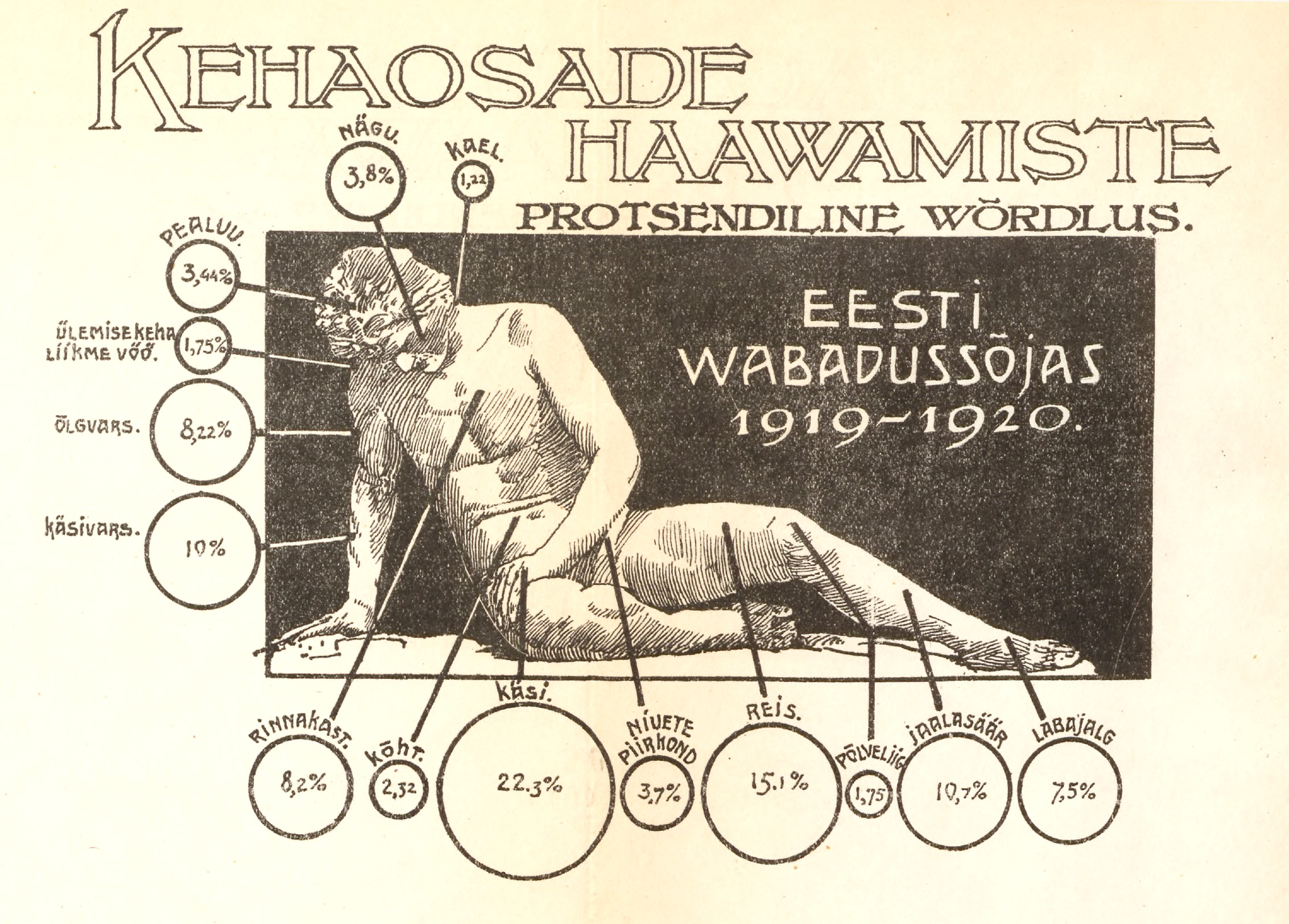
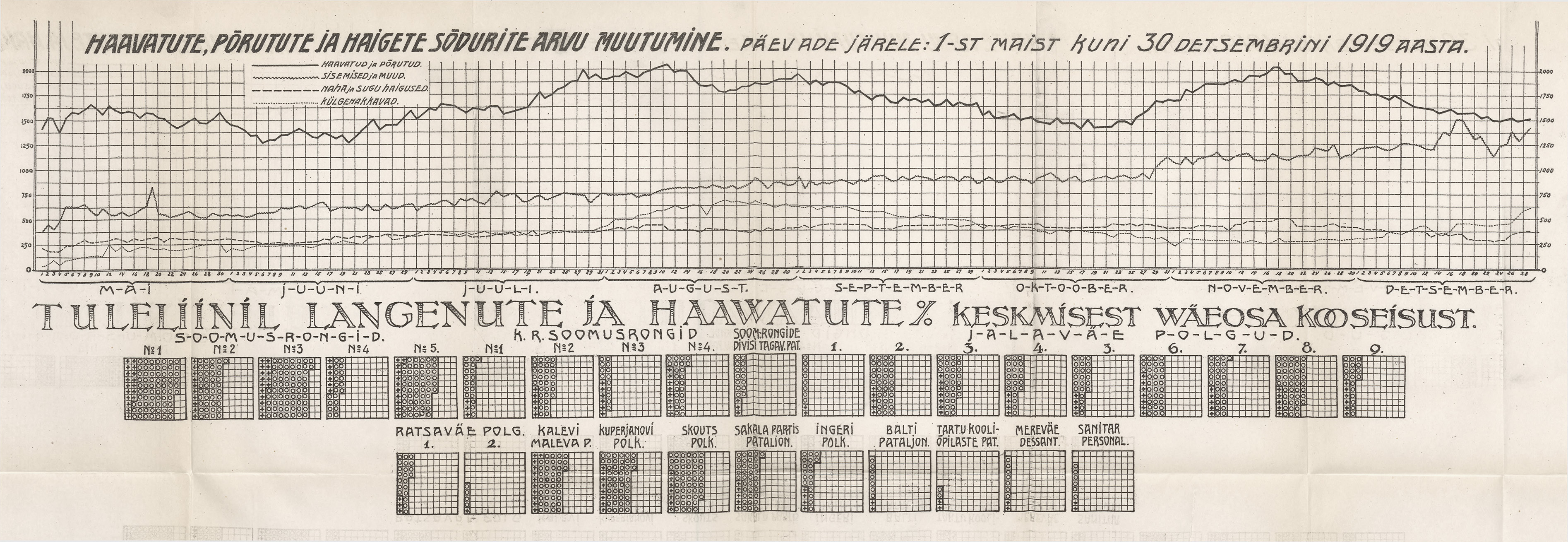 The State Statistical Central Bureau was not the only entity to release statistics and statistical graphs in the Republic of Estonia. Already in 1921, the Military Health Care Administration published a detailed set of medical statistics on the War of Independence (1918–1920). Reproduction
For anyone researching the history of the Republic of Estonia in the 1920s and 1930s, the statistical data published by the State Statistical Central Bureau (SSCB) are naturally a great source, but there are also yearbooks of various state institutions available. For more local historical research, the records of the Tallinn and Tartu municipal statistical offices are invaluable.
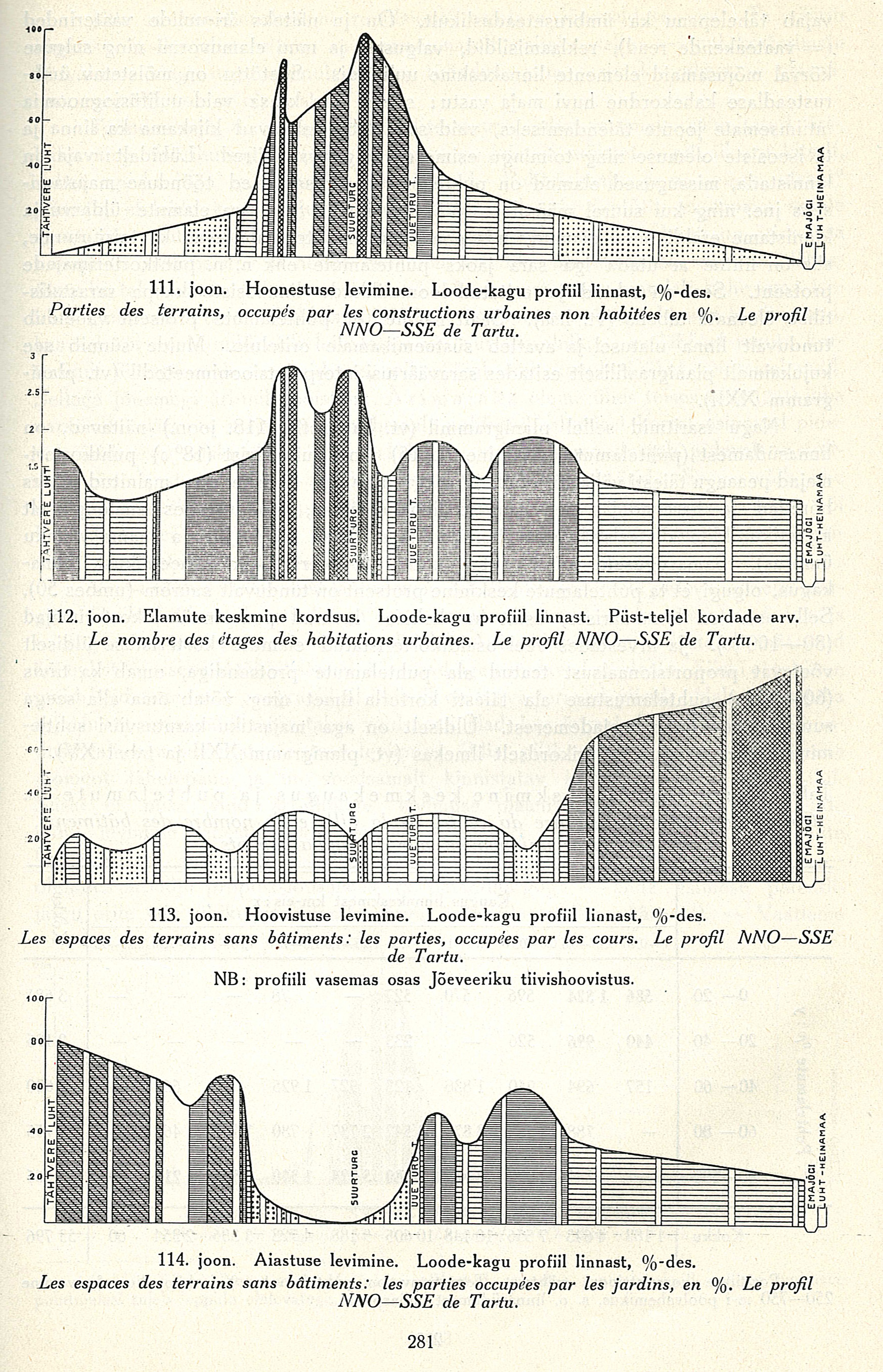 A hundred years ago, the young geographer Edgar Kant (1902–1978) measured and calculated geographic details of the city of Tartu with an accuracy and productivity that characterise the output of contemporary digital geoinformation systems and visualisation software. The image shows a page from the book “Tartu” (1927), depicting various features of the city’s north-west/south-east profile (area under buildings, number of storeys in buildings etc.). Reproduction
When we consider the statistical output of the individual departments of the SSCB, there is no doubt that the work done back then by the economic and agricultural departments is of immense value for historical research in these areas. The key production indicators (production volumes, prices, labour force etc.) were thoroughly recorded, processed and regularly published in periodicals, yearbooks or survey reports.
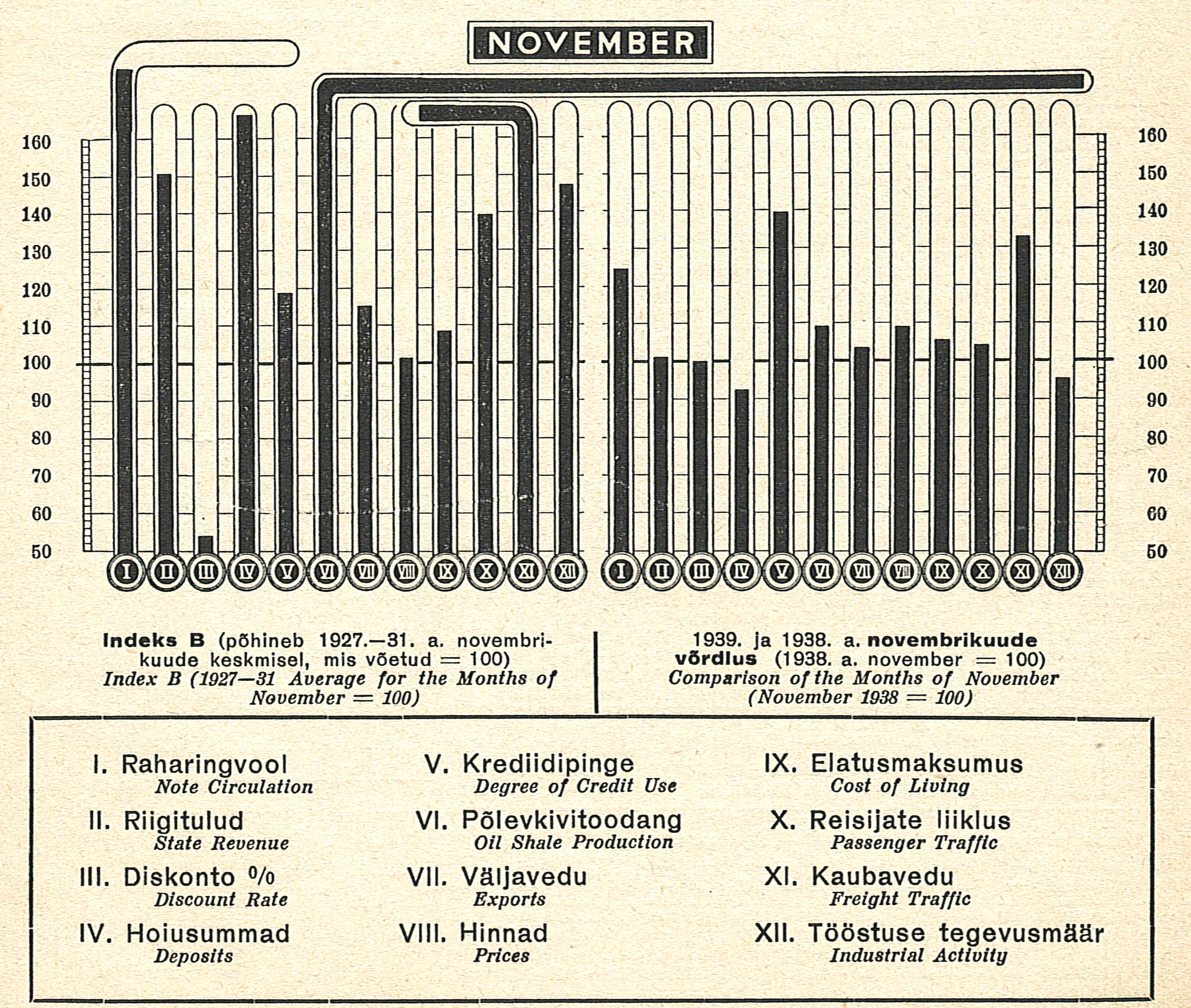 A diagram of indexes of economic activity from the late 1930s, which to the modern viewer resembles a data dashboard, a popular tool in the 21st century. Reproduction
In historical research, the focus has traditionally been on political and social history. After all, a large part of our understanding of the past is based on knowledge of how the people were governed and how they managed in those circumstances. In order to answer these questions today, one has to delve into the work of the general department of the SSCB, reflected in a range of materials. It is a treasure trove for historians.
Anyone who wants to study the demographic history of the Republic of Estonia will inevitably refer to the records of the two population censuses published as roughly 20 volumes. The political will of the people is recorded in the special brochures on the elections of the 2nd to 5th Riigikogu. Additionally, the Monthly Bulletin of Estonian Statistics published statistical overviews of all five parliamentary elections in the interwar period.
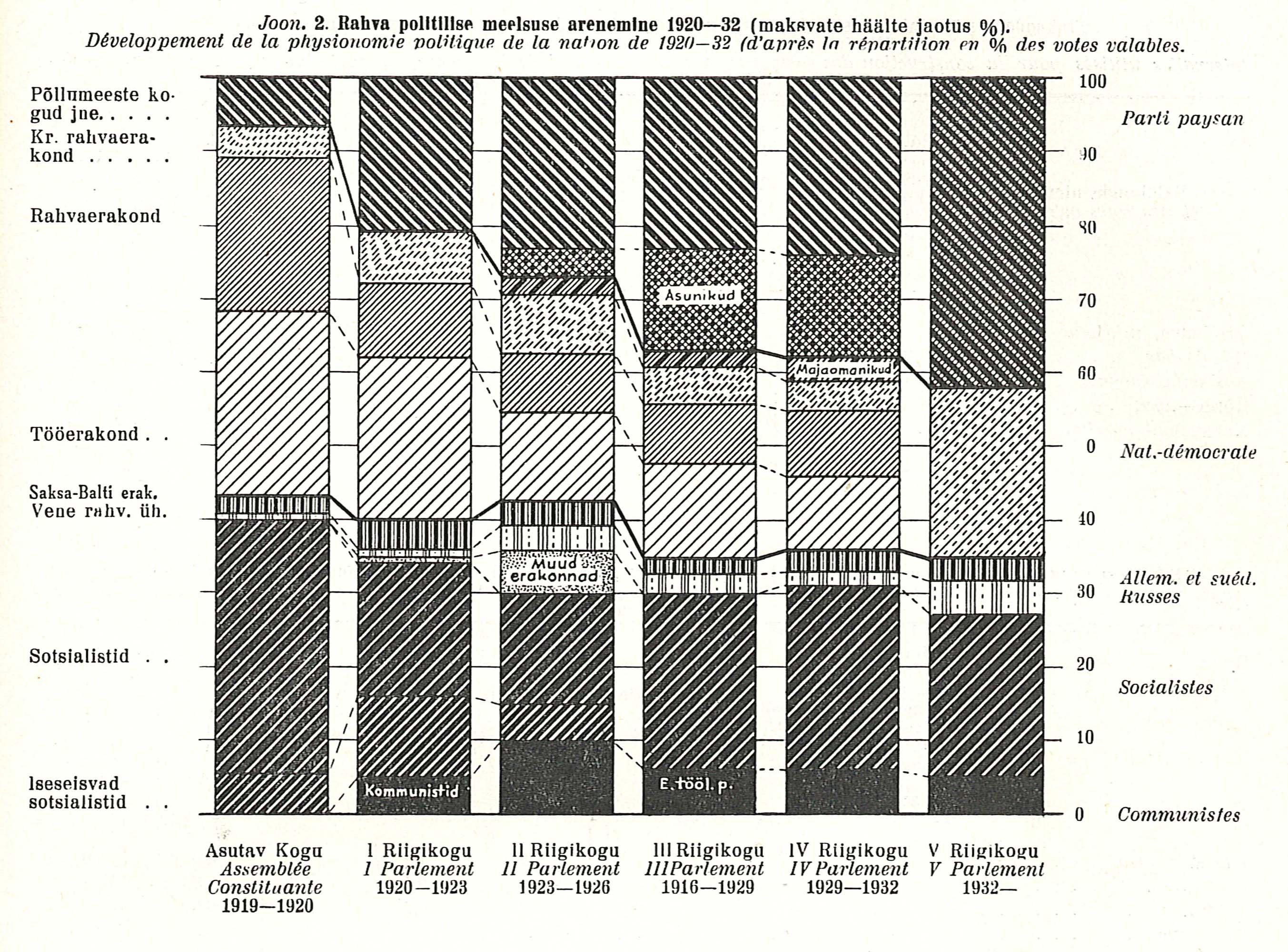 SSCB’s analysis of the electorate’s preferences in parliamentary elections (Constituent Assembly 1919, elections of the 1st to 5th Riigikogu in 1920–1932). Reproduction
There were specific, small-scale studies (mostly published in the Monthly Bulletin) on many of the key political and social processes in Estonia in the 1920s and 1930s, such as optimisation, land reform, the impact of the Great Depression that began in 1929, the 1930s campaign to Estonianise surnames etc. Also, there were smaller studies on a wide range of social and cultural topics, such as schools, sports, church life, publishing, resort culture... and the list goes on.
Still, saying that the available statistics cover all areas of life in Estonia in the interwar period would be an exaggeration. Starting with political history, there are significant gaps, to the chagrin of historians. As mentioned, there are statistical overviews of parliamentary elections, but there are no such data available on local elections (in those times, local elections were mostly attributed minor significance) or political parties (considered a private sphere where the SSCB did not interfere). The classified nature of national defence materials is understandable – in this domain, one of the few sources available is the detailed annual reports prepared by the Estonian Defence League and published until mid-1930s. The activities of state institutions were also rarely covered by the SSCB, but in this area historians have recourse to the relevant yearbook issued by the Government Office starting from 1934.
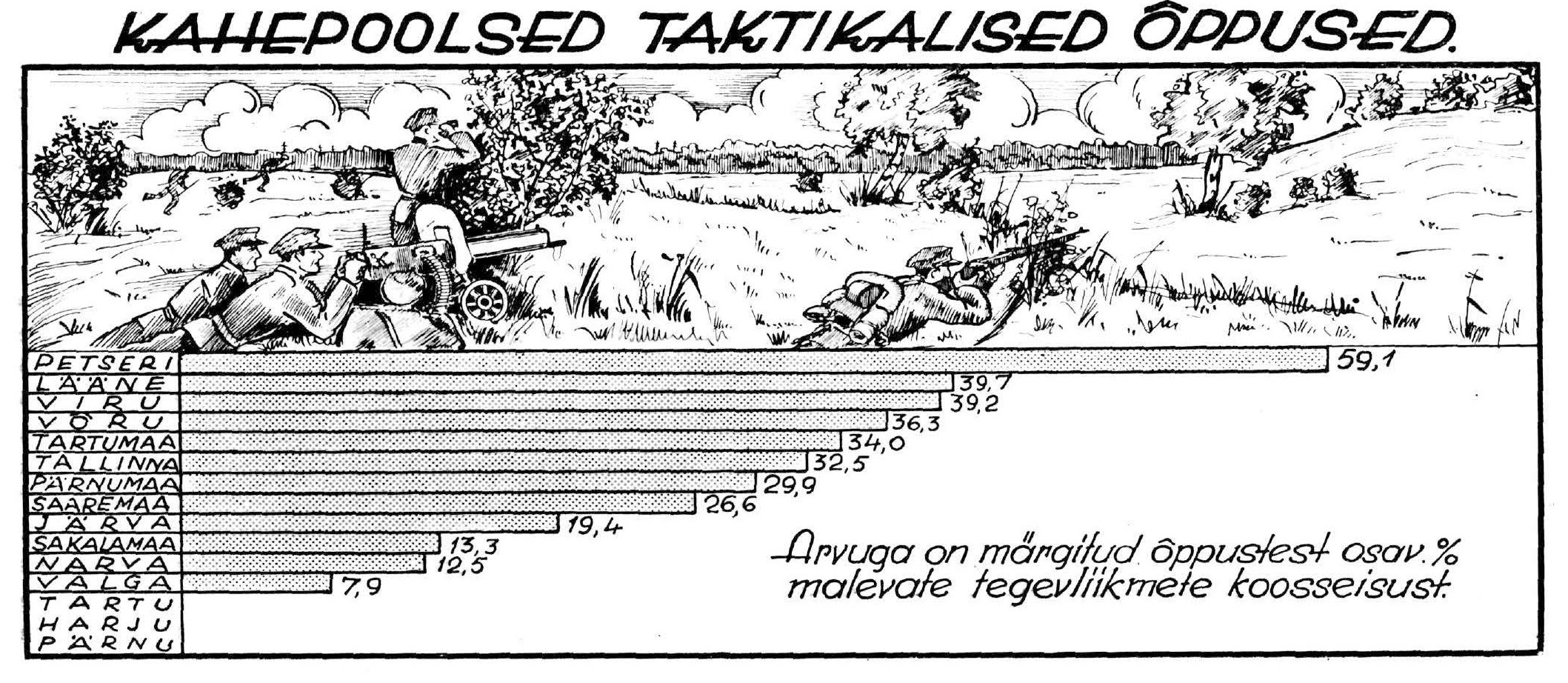 A graph prepared and published by the Estonian Defence League with statistics on military exercises held by League districts (approx. late 1930s). Reproduction
Historical researchers can accept the absence of sources that never existed, but the greatest tragedy for them is when records have been destroyed. Of the masses of raw data collected during censuses by the SSCB, only the materials of the 1939 Agricultural Census have been preserved. These are today cherished by local lore and family historians. The original data of population censuses would be even more useful, but these records have not survived. They were most probably destroyed in March 1944 during World War II, when the archive building was hit during the Soviet air raid on Tallinn.
As for the existing statistical materials, the fact is that, until now, the majority of these have been used only marginally by historians, or not at all. This offers a unique opportunity for research, as life in interwar Estonia remains unstudied in large parts.