
The beginning of the computerisation of statistics
Author: Hiljar Tammela
The Soviet Union had a planned economy, which basically meant that the volumes and prices of production and services did not develop according to market relationships but were centrally planned and the capital was collectively owned (by the state or cooperatives). In the economy, which was almost entirely run by the state, everything to do with the planning work (making plans, analysis, performance reporting and checking) brought about tremendous administrative burden on all levels. When it became obvious that the reporting burden was becoming excessive for institutions, its volume was significantly decreased in the middle of the 1950s and transferred to the statistical administration (it was previously handled by the ministries). Therefore, a major part of the “state bookkeeping” also became the task of the statistical authority. For this purpose, in 1957, the Machine-Computing Station of the Statistical Administration of the Estonian SSR was established as a separate unit.
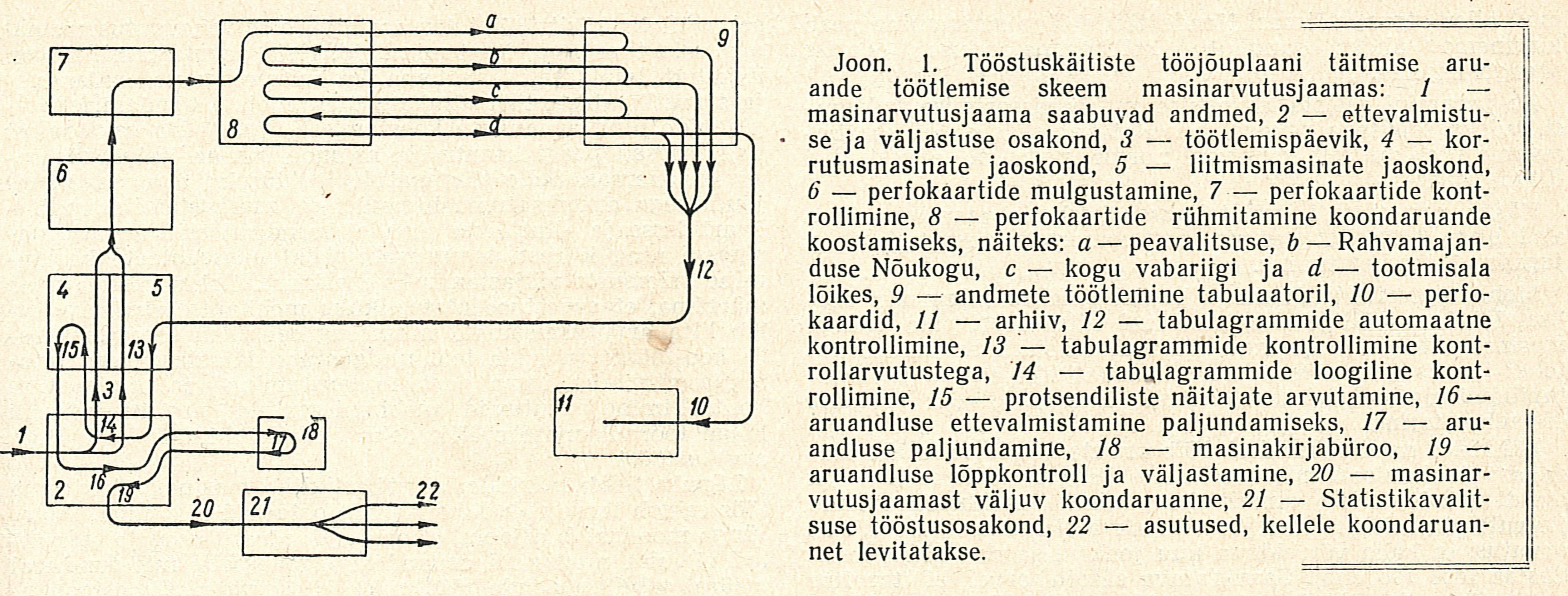 Visualisations make it easy to understand even more complicated processes. Reproduction
Statistical data processing on analogue computers was not actually new for Estonia. The State Statistical Central Bureau (SSCB) of independent Estonia had ordered two mechanical computers from France for the processing of the 1922 census data. The SSCB used these computers also for the next major statistical activities. The number of machines, volume of information to be processed and the size of the staff was, of course, much larger in Soviet Estonia. By the mid-1960s, nearly 200 people worked in the system’s central computing station in Tallinn. In addition, many local computing stations had been opened in districts.
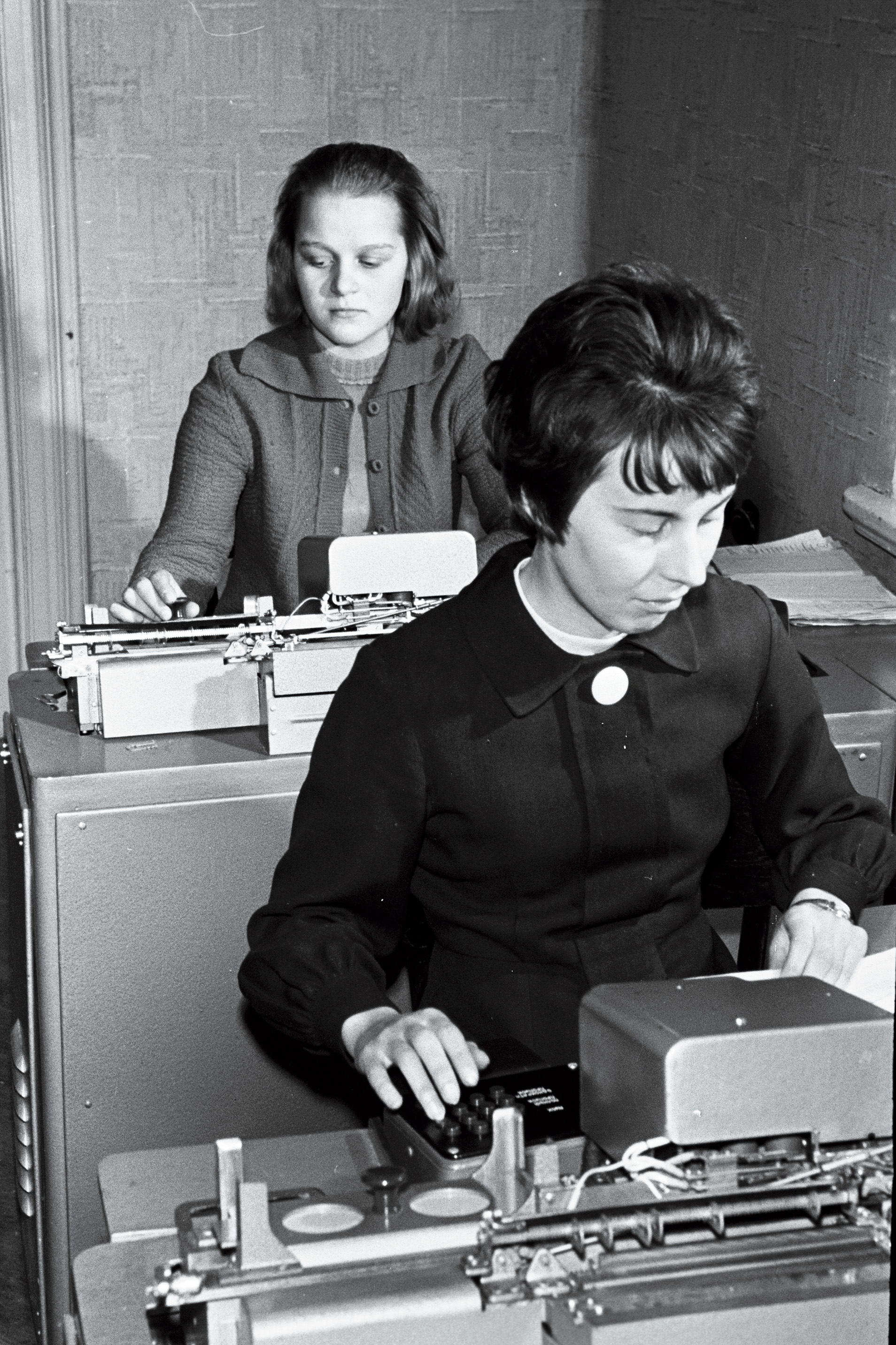 Operators of Rakvere machine-computing station working on analogue computers, 1963. Photo: Film Archives of the National Archives
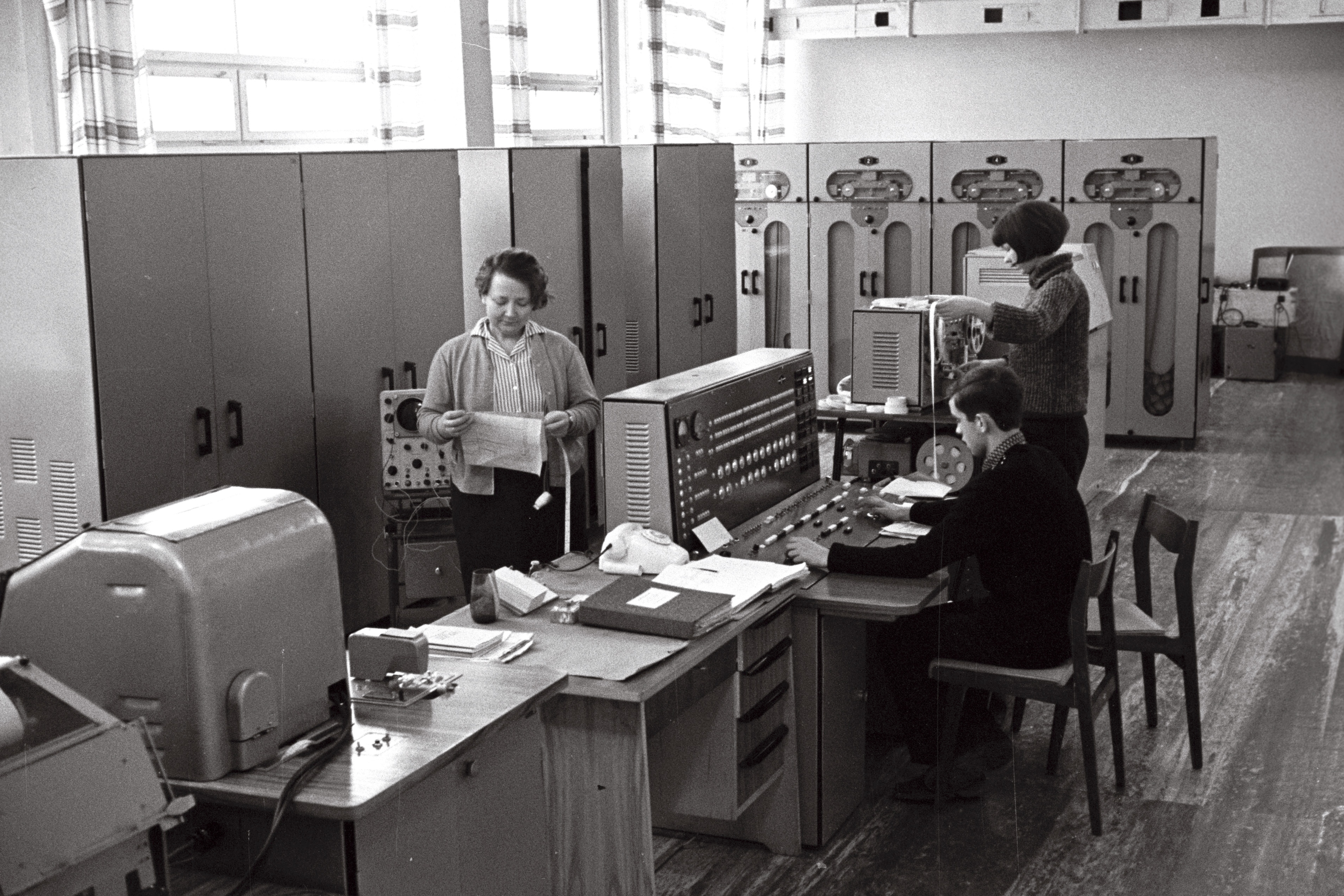
An important milestone was 1966 when an electronic computer started to be used and the institution was renamed as the State Computing Centre of the Statistical Central Administration. According to different data, this was either the fifth or sixth computing station with an electronic computer in Estonia. Computers had been primarily adopted for making calculations for research purposes (the first one was in 1959 at Tartu State University), but since the second half of the 1960s, they started to be used more widely in the economy. The first computer of the statistical system (approximately the tenth in Estonia) was Minsk-22, which was the most common model here during the period.
First electronic computer Minsk-22 soon after it arrived in the State Computing Centre of the Statistical Central Administration of the Estonian SSR in 1966. Photo: Film Archives of the National Archives
Minsk-22, which was built in Belarus, could be compared to a dozen wardrobes in size. Still, it was a small computer for the time (the first computer in Estonia, Ural-1, required floor space the size of a basketball court). The calculation speed and the working memory were around a million times smaller compared to average office computers of today (the indicators are not entirely comparable for technical reasons). These early computers did not yet have a keyboard, monitor or mouse. The source data were entered on perforated films or cards and the calculated results were printed on paper.
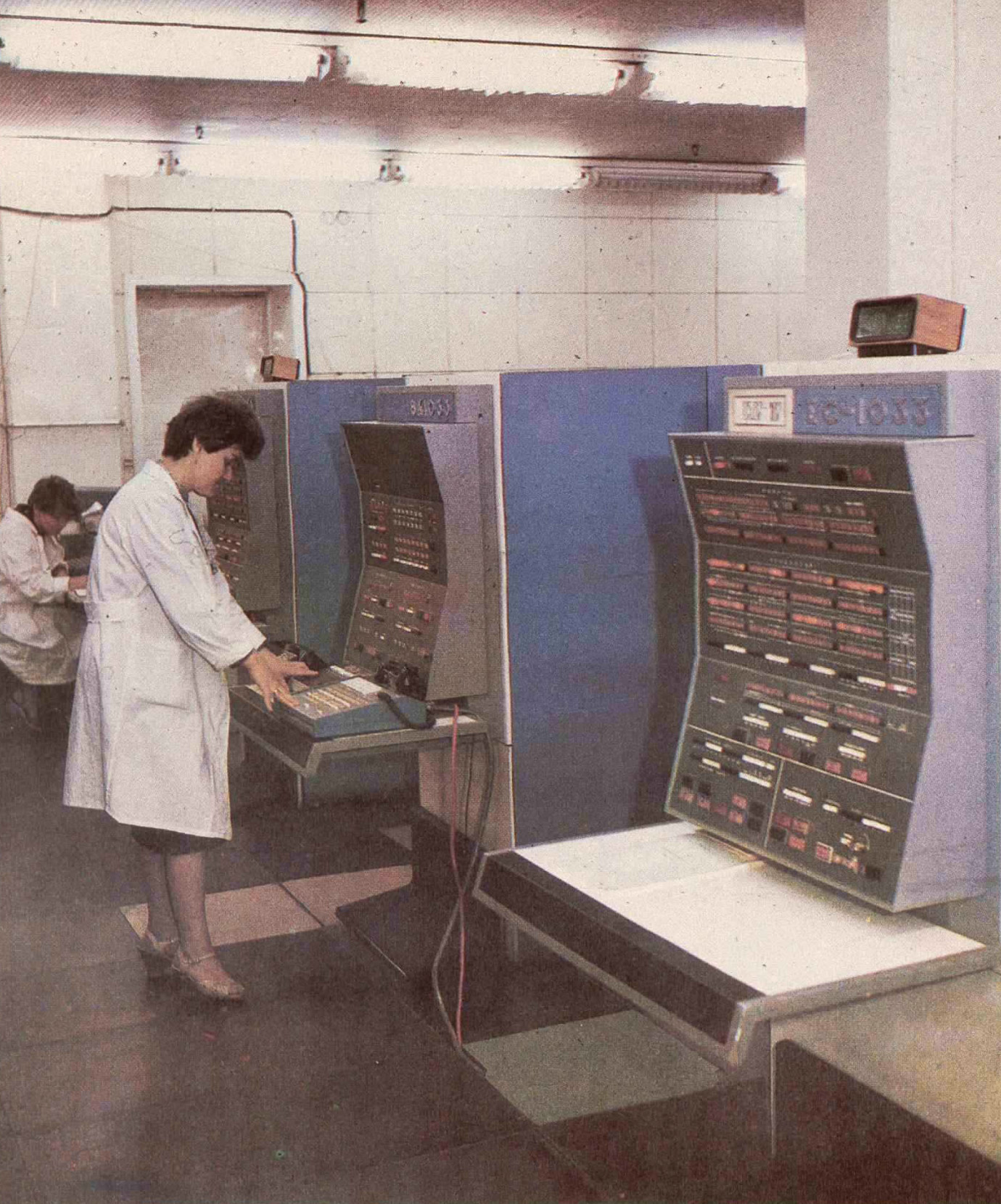 Newer and more advanced computer ES-1033 in the State Computing Centre at the beginning of the 1980s. Reproduction
Over time, the statistical administration acquired more advanced computers, which meant that they could be used for new tasks, not just as powerful calculators. In the 1970s, work started on the development of an automatic system of official statistics in the Soviet Union. It primarily meant further technical harmonisation of statistical activities and collecting data digitally at a central level. In the following stages, development started on the digital transmission of data through all levels and on making the collected data more conveniently available to users through electronic databases. The first major obstacle here was the transmission capacity of the Soviet telephone network: even digitally created data were mostly physically transmitted (a courier delivered the magnetic tape), but the bulk of the data was transmitted by telegraph or mail. Electronic databases (at the time, “automatised data banks”) simplified rather the operator’s than the data user’s work: to get data, one had to go to the actual computing centre and submit a request on paper.
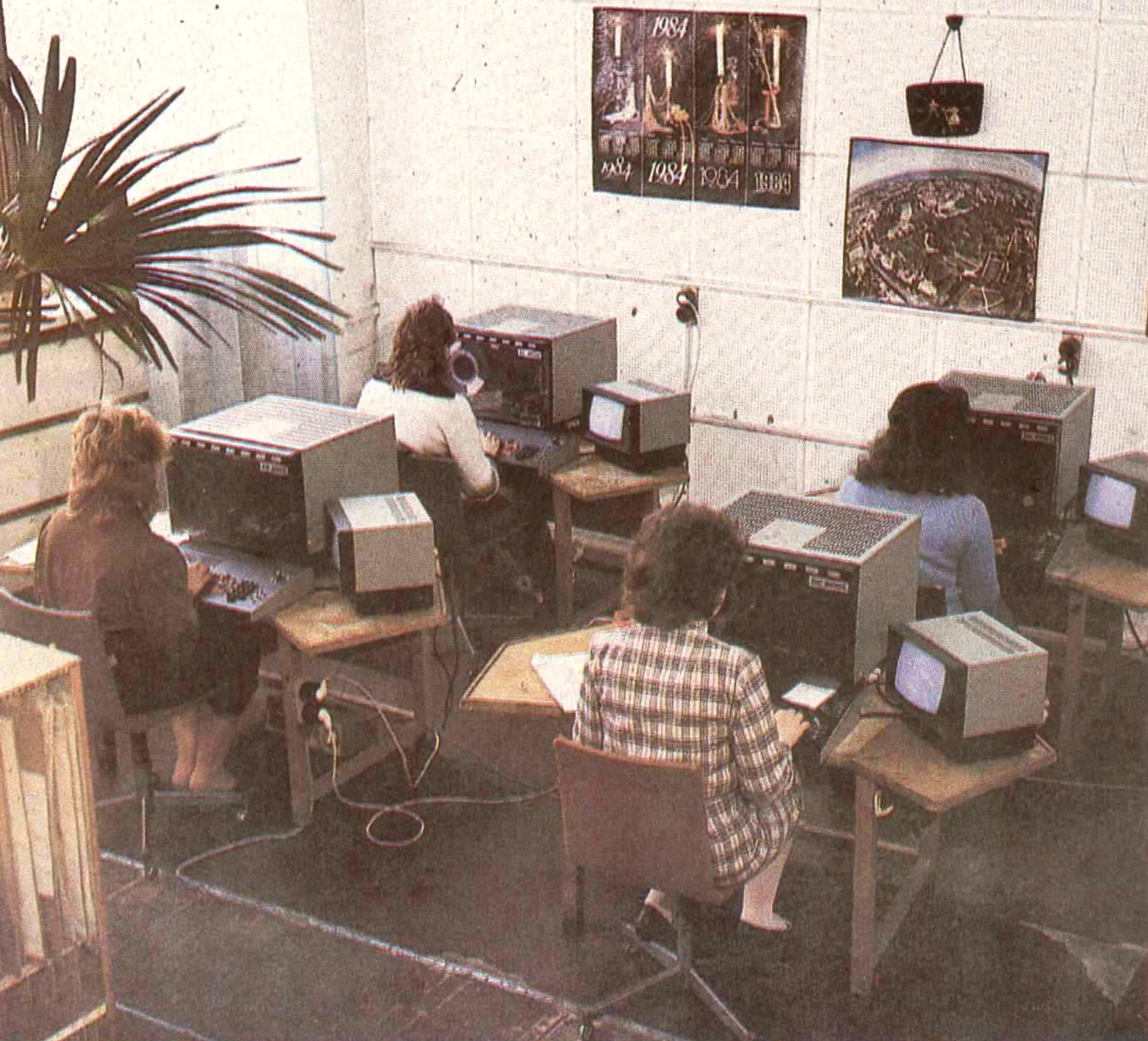 Entering data from paper to a magnetic film for further transferring into a computer, 1984. Reproduction
Another growing problem was also of a technical nature: it concerned the institution’s mechanical equipment. Over time, a lot of computing equipment had been gathered, but a big part of it had deteriorated or become outdated. The rest were built on different technical platforms, which made their smooth cooperation difficult. The institution’s work was very dependent on technology, and the lack of quality devices and spare parts was especially noticeable.
When Estonia regained independence, computing centres were no longer needed, as the planned economy ceased to exist, and personal computers became widely available. The main statistical computing centre was closed in 1994. Its lasting contribution, however, is the activities of its final years: planning and establishing the national registers of the Republic of Estonia (population register; enterprise register, or the predecessor of the commercial register, etc.).