Statistics after World War II
Author: Olev Liivik
During Stalin’s reign, statistics was one of the domains in the Soviet Union that was predicted to disappear in the future. It was believed that statistics would be replaced by socialist political economy, defined as the study of economic relationships with the aim to identify the laws and principles that were believed to govern social production and the distribution of wealth.
Until then, statistics was required to produce the accounts, on the one hand, mostly by adding up the figures from forms and creating tables and charts. On the other hand, the statistical organisation was now required to perform some new tasks not really concerning statistics, such as checking compliance with original accounts and the fulfilment of plans. This approach led to the complete restructuring of the statistical system. In 1930, the statistical administration as a separate entity was abolished and replaced by the Central Administration of Economic Accounting that operated under the State Planning Committee and oversaw accounting and reporting in the entire USSR.
When the war with Germany started, the Central Statistical Administration was re-established in 1941 but it continued to operate under the Planning Committee. It was mainly due to the war that resource accounting became the prevalent approach in statistical production. In addition to regular accounts and forms collected from enterprises and institutions, the Administration introduced flash surveys as a new method to better reflect those extraordinary circumstances. 142 flash surveys were conducted during the war for military planning purposes, providing the government with necessary and up-to-date information about human resources, production equipment and material resources, for example.
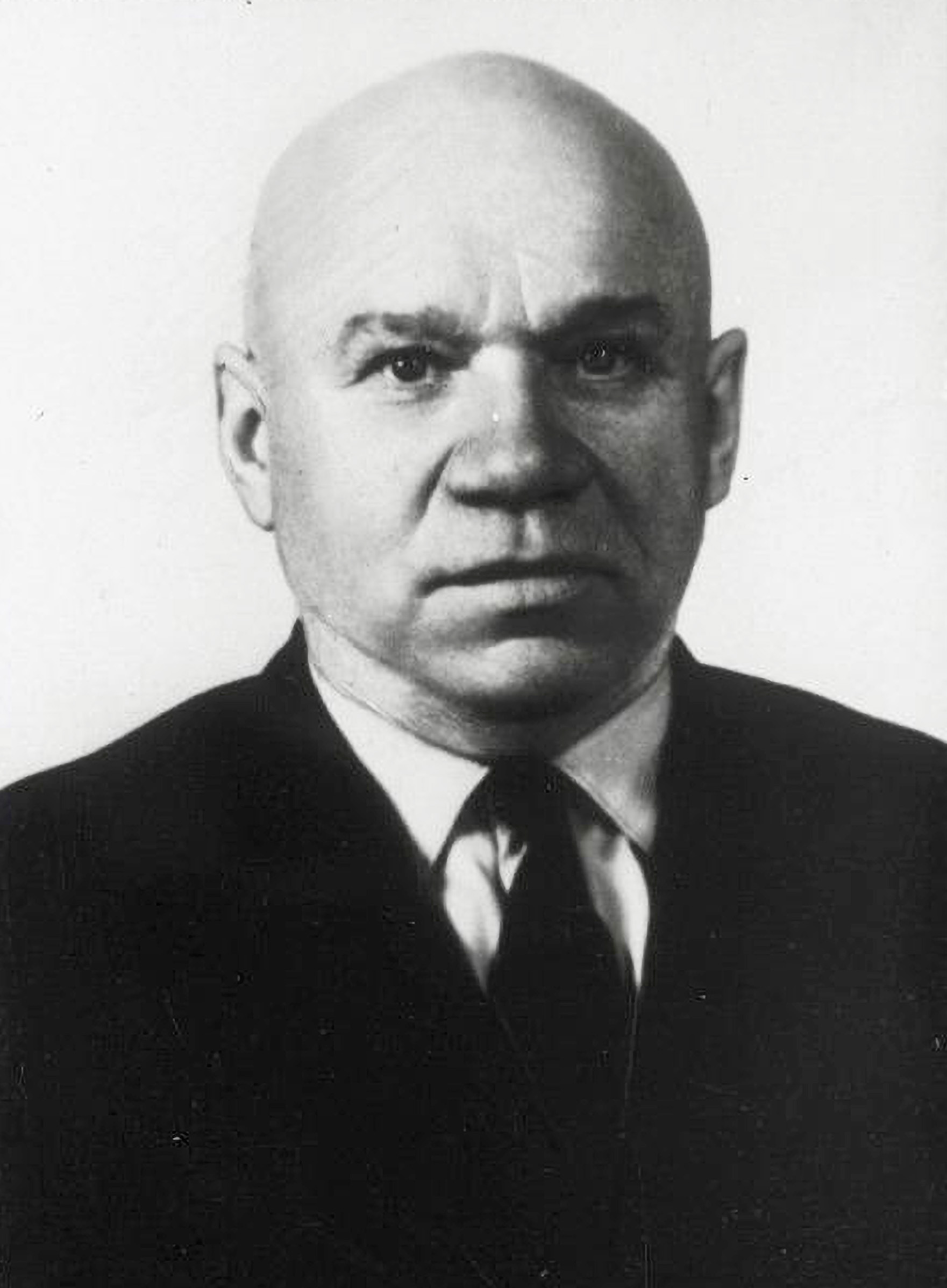
Vasily Satanin, deputy ESSR commissioner of the State Planning Committee of the Soviet Union and director of the Statistical Administration. Photo: National Archives
The Soviet system and organisation of statistics, which had briefly been in place in 1940–1941, was restored in Estonia in 1944. The statistical administration was set up under the office of the Estonian SSR commissioner appointed by the State Planning Committee of the Soviet Union. The main tasks of the Statistical Administration were collecting and processing forms, but this did not result in much statistical information of lasting value and the data did not cover all domains, as some of the statistics from state institutions never even reached the Statistical Administration. In addition to regular accounts, there were 37 censuses, surveys and statistical actions conducted in Estonia in the period of 1944–1947 with variable quality. One of the first major statistical actions was the housing stock census of cities in 1945, but there were several other surveys conducted that year, some of which became annual (for example, censuses on sown area, livestock and agricultural machinery).
A lot of attention was also paid to population statistics. The statistics on the rural population were initially based on household registers and the lists of temporary residents in each rural municipality. Starting from 1945, population data were collected from executive committees. From 1947, the age-sex structure of the rural population was regularly estimated, with data collected twice a year until the 1959 population census.
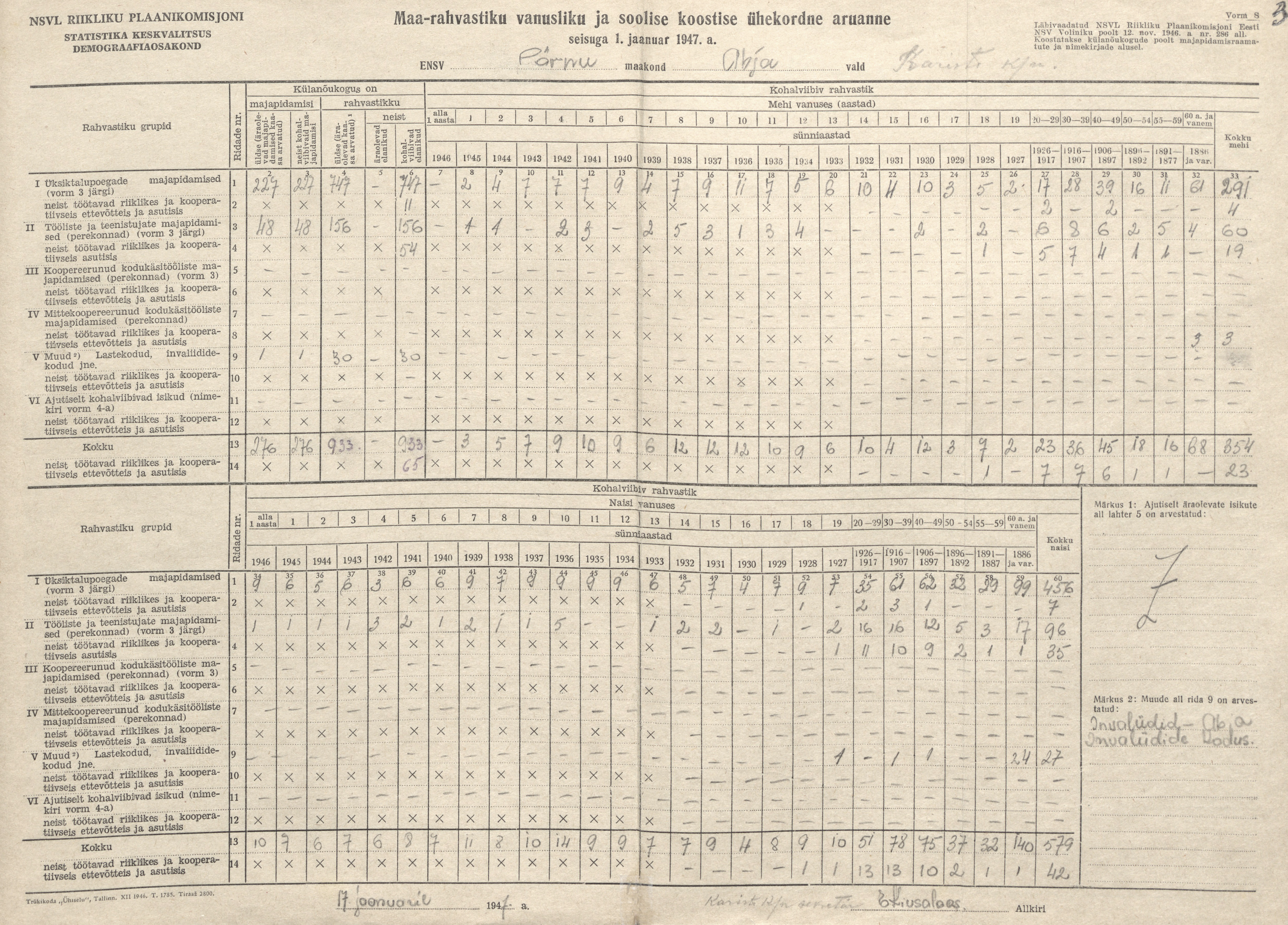 A statistical report on the rural population, showing population by sex and age as at 1 January 1947 in Abja rural municipality in Pärnu county
The collection of population data was easier in cities where having a registered address was obligatory and there were resident logs. According to the data of the Statistical Administration, the population of Estonia as at 1 January 1946 was 881,000, whereas by 1949 the estimated population was already over one million, with the number of women being nearly 1.5 times higher than the number of men in Estonia. Tallinn city was the most populous administrative unit with nearly 192,000 inhabitants. Among rural areas, the highest population count was recorded in Võru county (excluding Võru city) with nearly 78,000 residents.
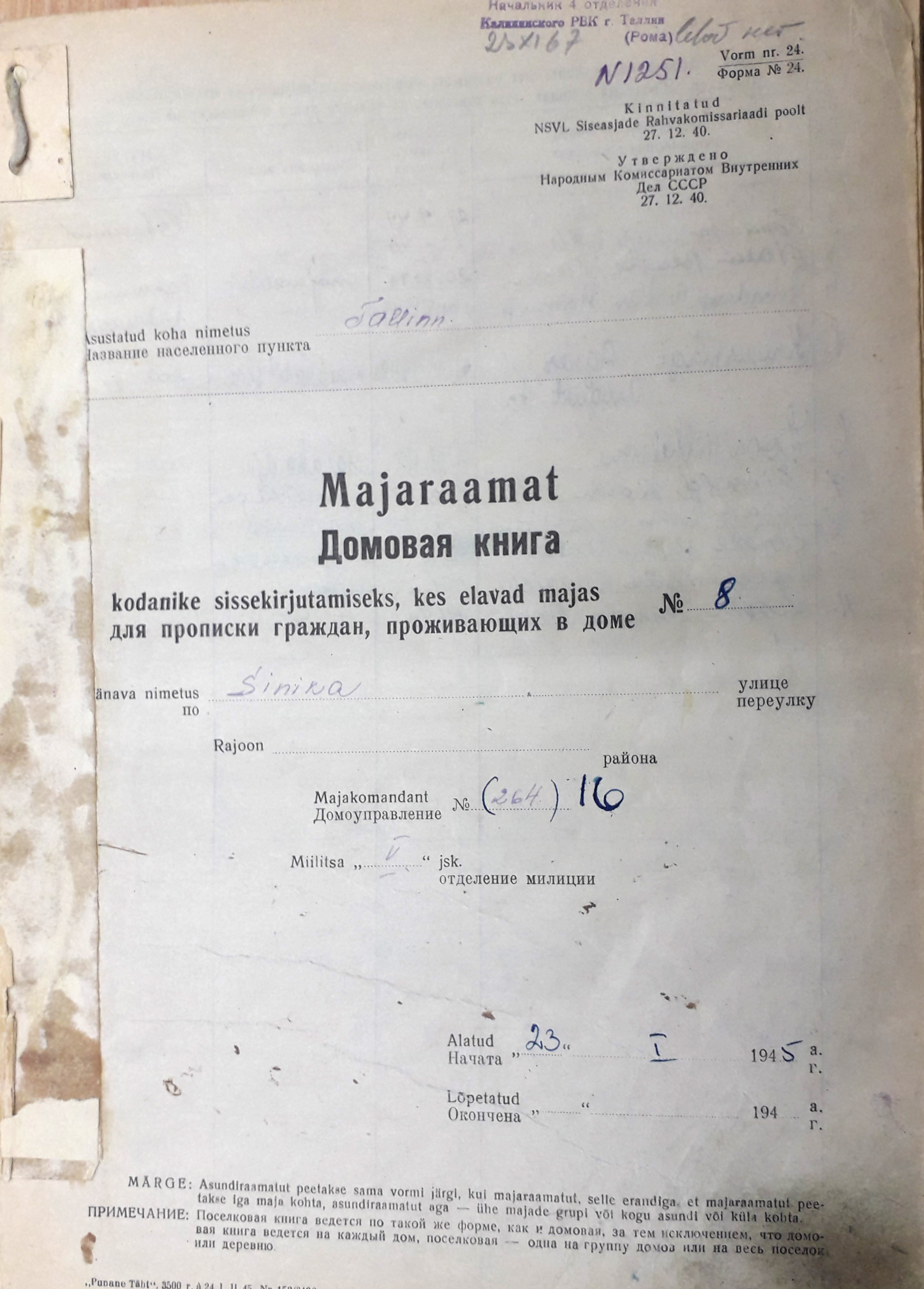
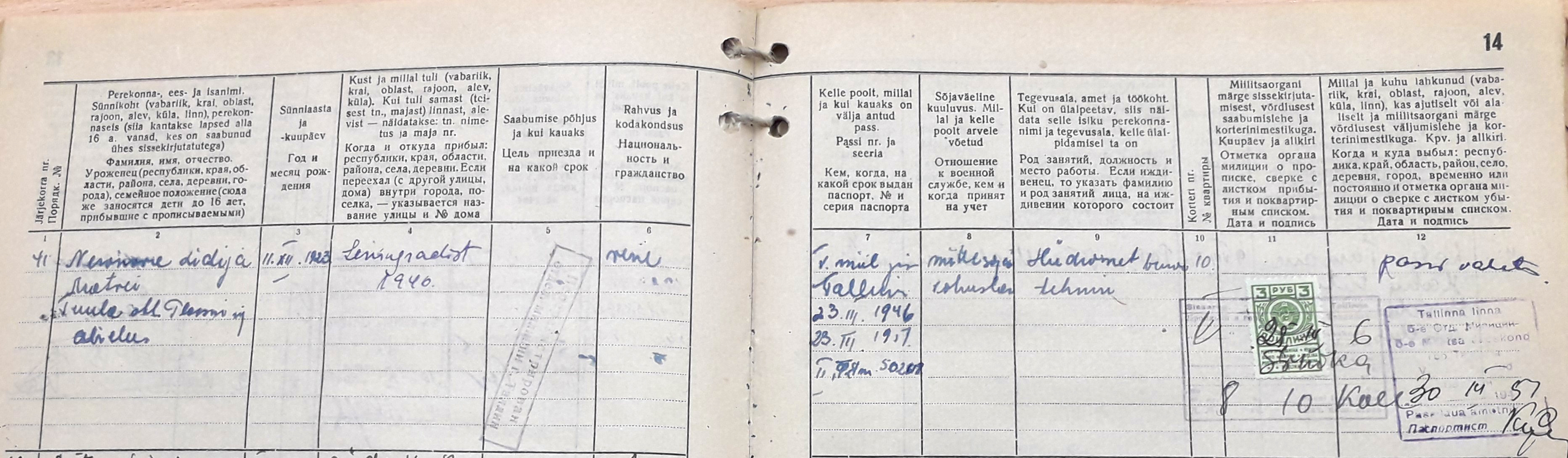 The cover and a page of the resident log kept for the house at Sinika 8 in Tallinn.
In the post-war years, there were again structural changes in the statistical system – in 1948, the Statistical Administration was separated from the planning authorities and started to operate under the Council of Ministers.
There was not much progress in statistics production. Until the end of the 1950s, the production of current accounts continued side by side with one-off statistical actions, most of which were the same as before. A new activity in the 1950s was the preparation of analytical reports on topics such as population, industry, construction, transport and healthcare.
In light of the above, it is remarkable that statistics was given a new lease of life after Stalin’s death. Statistics was recognised as an independent discipline and included among social sciences, even though besides accounts-based statistics there was also mathematical statistics, which grew in importance in the Soviet Union in the following decades with the advances in computing technology.