Statistical publications
Author: Hiljar Tammela
The State Statistical Central Bureau (SSCB), which started its activities in the spring of 1921 with two employees and no office space, could show the first results of its energetic work in the same autumn. The SSCB published two brochures of a couple of dozen pages: the first on Estonia’s industrial production and the other on foreign trade. These were followed by many similar volumes.
“Looking at the small brochures now, we can hardly be proud of these, both in terms of their form and content…,” was the modest evaluation of the SSCB just three years later. This clearly shows how the SSCB developed very rapidly in a short time, setting the bar higher for itself.
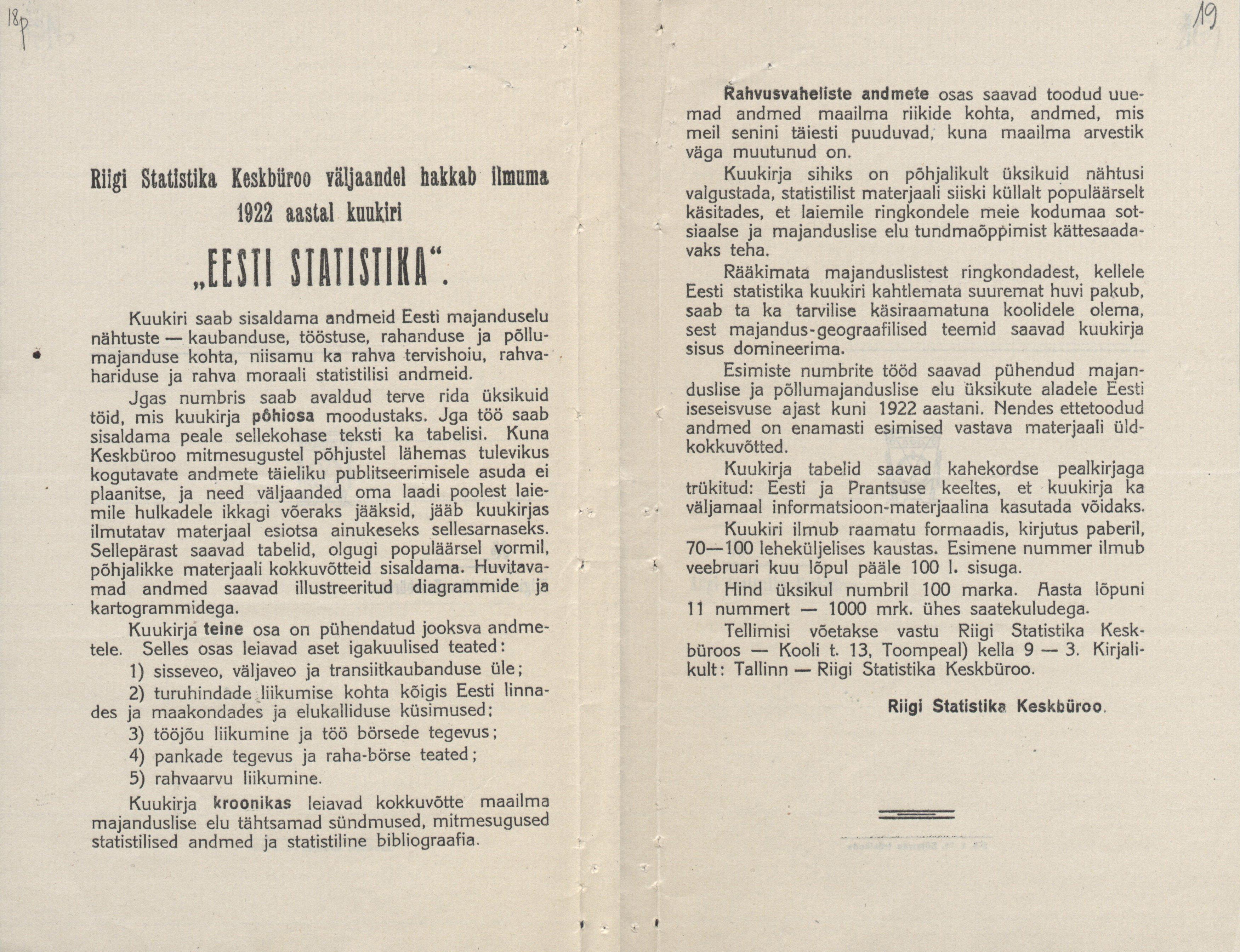
Advertisement from the beginning of 1922. The Monthly Bulletin of Estonian Statistics was first published in March of the same year. National Archives
The period of short brochures and kind of random publishing activities of the SSCB came to an end with the publication of the Monthly Bulletin of Estonian Statistics in March 1922. In the periodical, both current statistics as well as longer studies on specific issues were published. The production volume of the SSCB increased, but in the first year, there were constant printing and other technical difficulties, which led to a major review and reorganisation of its publishing plan around 1923–1924. Many of the principles agreed on at the time were followed until the end of the independence period.
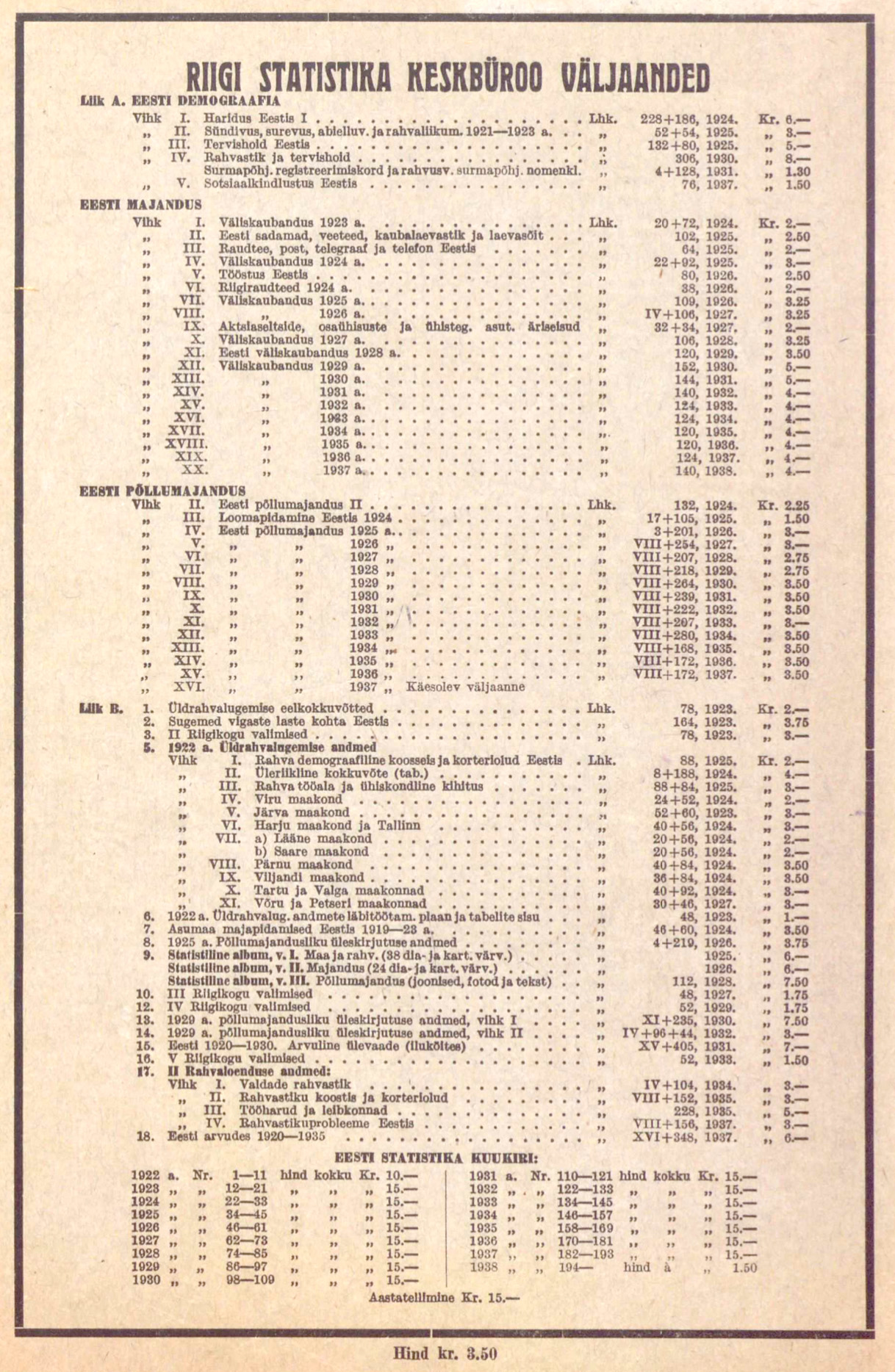 Advertisement with the SSCB publications table, traditionally found on the back cover of publications. Reproduction from the second half of the 1930s when the list of printed publications had become very long.
The publications printed by the SSCB for a wider audience and in the Estonian language during the period 1924–1940 could be divided into six major parts from today’s perspective.
-
The monthly publication Monthly Bulletin of Estonian Statistics reached almost 250 issues.
-
Estonian Agriculture, Foreign Trade and Activities of Estonian State Railways were published as yearbooks. (At first, the latter was published in cooperation with the railway administration, but after it was merged with the SSCB, it was compiled by SSCB’s traffic department).
-
Summaries of more important regular processes or surveys included the materials of population censuses (12 volumes on the 1922 results and 4 volumes on the 1934 results) and results of agricultural censuses (1925, 1929, 1939). Once, in 1937, an economic census was carried out. Its results were published in several single studies and in four compendia. The election results of the 2nd to the 5th Riigikogu (1923–1932) were also published as individual volumes.
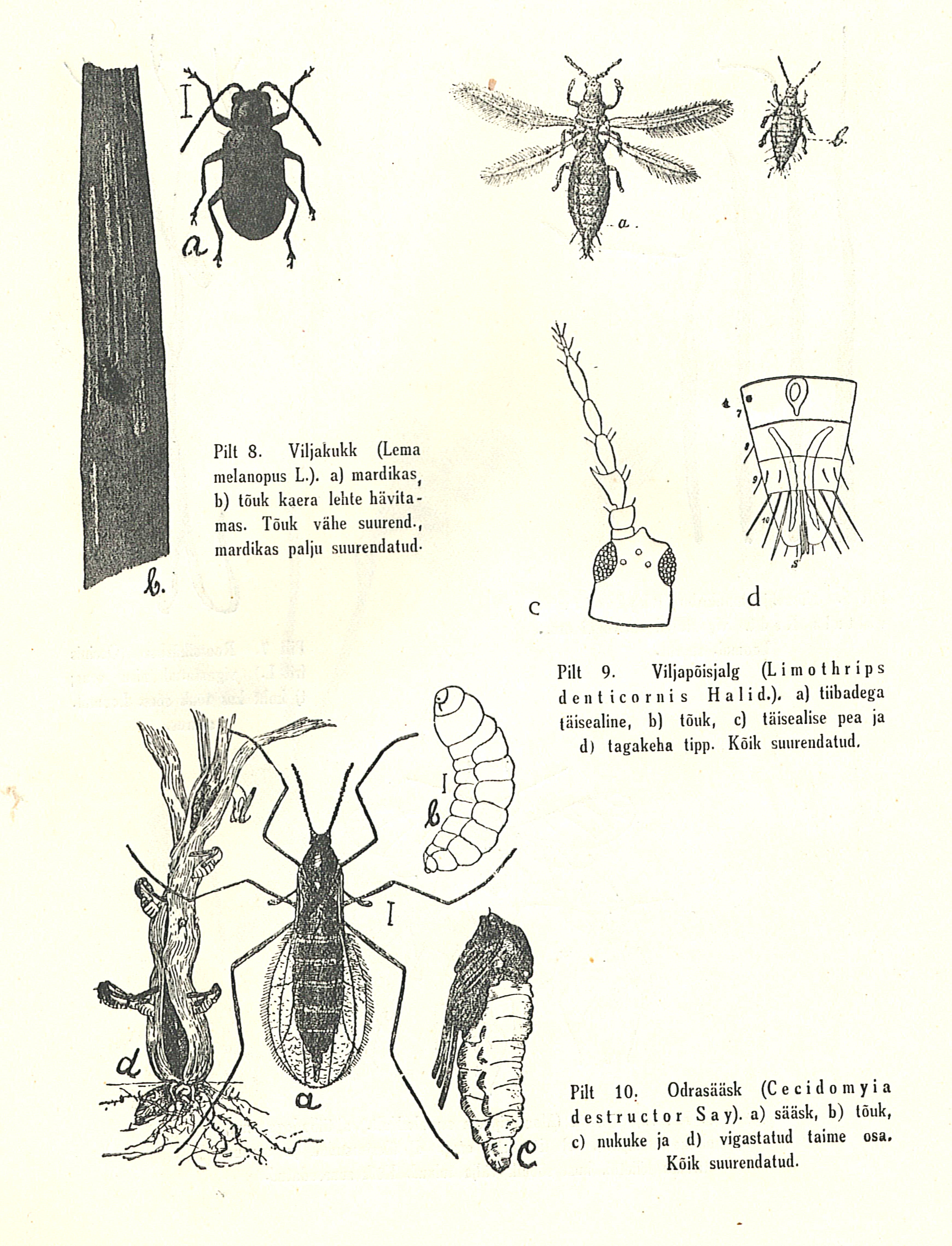 Today, the fact that the SSCB also published entomological literature, or publications on insects, is not widely known. The purpose of the 1923 booklet “Kodumaa kahjulikumad putukad”, on harmful insects of Estonia, was to standardise the information received from agricultural correspondents (in Estonian regions, different dialect words were used for plant pests). Reproduction
-
Studies on different domains or individual processes were published at an irregular interval. These included about a dozen publications on areas such as education, healthcare, cattle management, shipping, etc. Some of these studies were first intended to serve as a basis for a regular series, but probably not enough money was available to realise this plan.
-
The flagship publications, covering in numbers the current knowledge about the society, also had a promotional role. These were, for example, the colourful and still attractive Statistical Albums (3 volumes in 1925–1928) and the seemingly all-encompassing tomes of numbers Estonia 1920–1930 and Estonia in Numbers 1920–1935.
-
It is today a less known fact that on the basis of the information collected by the SSCB, around a dozen address books were published in 1924–1938. These information catalogues were a predecessor of the more recent telephone directories and included address data of state authorities, societies and companies and sometimes also practical handbooks for citizens, which were essentially tips for how to communicate with the state in different matters.
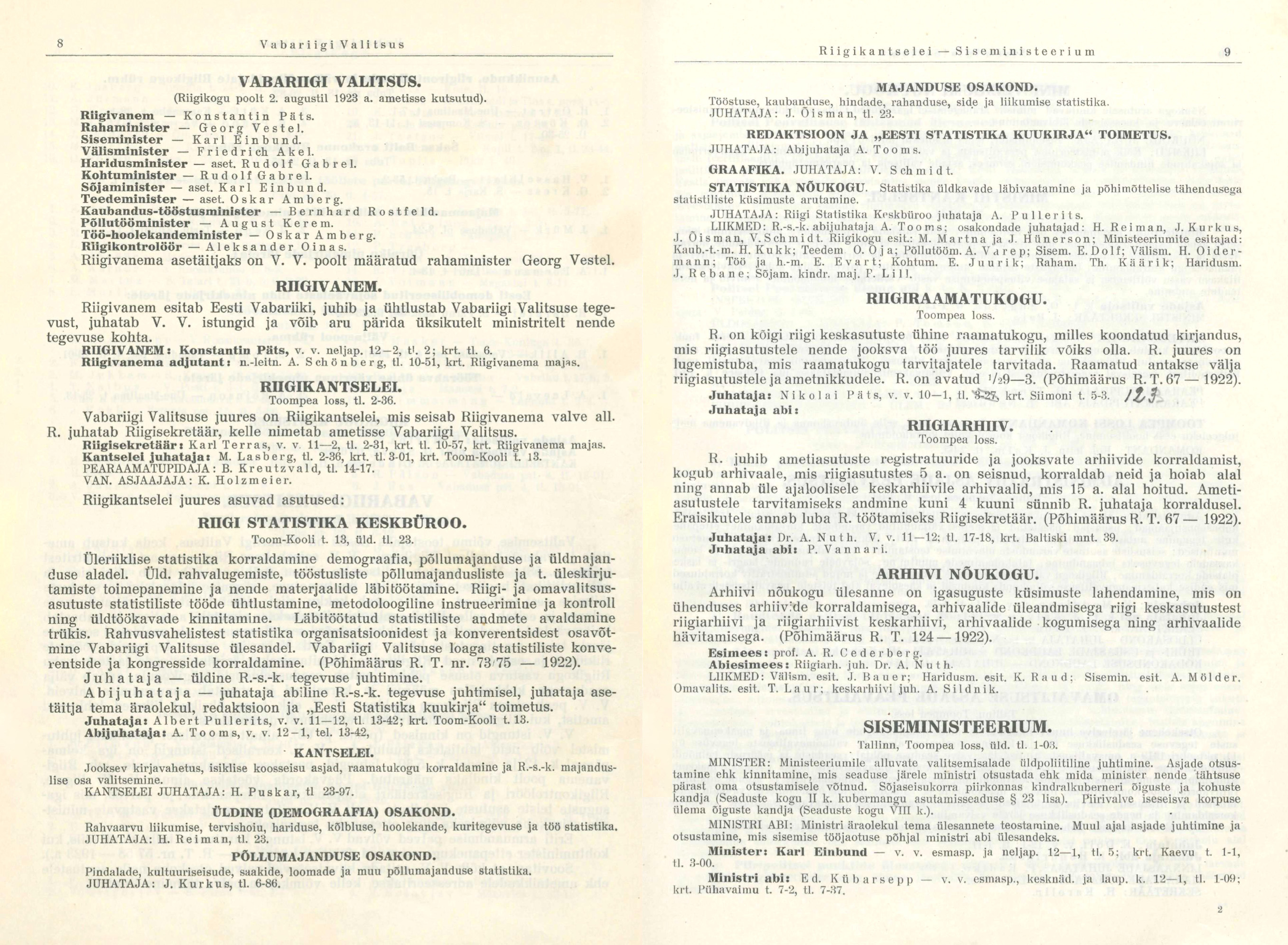
Pages from the address book “Riikline aadressraamat” (1924) with information about the SSCB itself. Reproduction
When looking at the publishing plans of the SSCB and their realisation, the issue of money is noticeable throughout. Some of the bigger plans were never implemented, but some were realised much later. It seems that the SSCB was ahead of its time with its ideas and potential.
Considering the relatively small size of the country as well as its budget, the SSCB set a goal to publish only important statistics, covering as many domains as possible. The texts accompanying the tables were to have a bigger role, also serving the purpose of popularising statistics.
The primary users of the statistical production were without a doubt educated officials of the Republic of Estonia. Considering that data tables were often published in daily newspapers and other popular printed media, it is probable that the development level of the society was such that these statistical materials also had a wider audience.
On the 10th anniversary of the Republic of Estonia, in February 1928, Albert Pullerits, the director of the SSCB wrote: “The growing interest of the public in statistics is also proven by the content of printed media /…/ It can be said that it rarely happens that the word statistics is not found on the pages of daily papers, whereas it was completely unknown to the wider audience just about ten years ago.” A century later, with hindsight, it can be said that if the director was exaggerating on this festive occasion, he was exaggerating only a little.
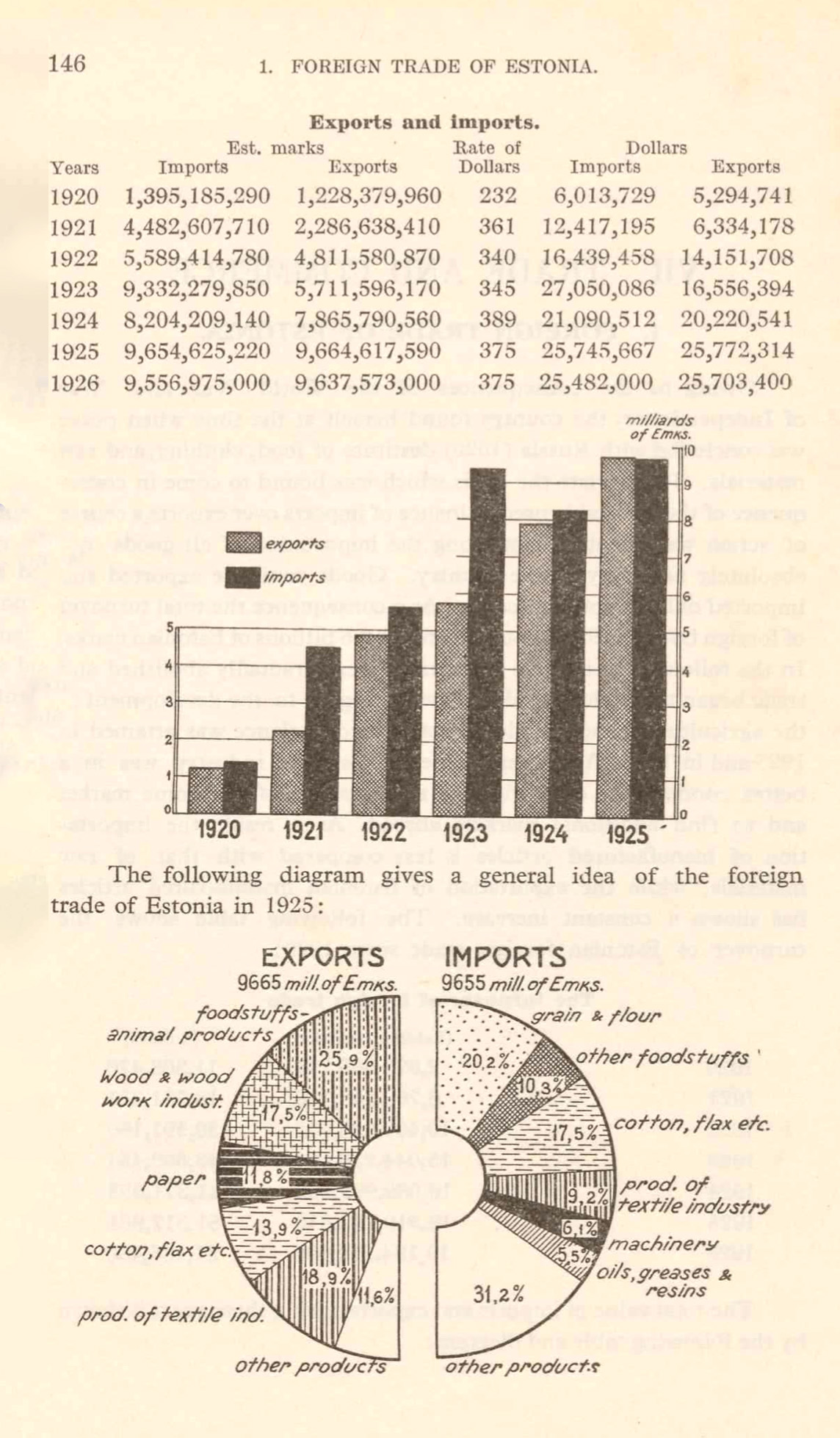 The SSCB also considered international readers, introducing in its publications parallel table headings and article summaries in other languages – at the time, in French, which was the international language of communication. In addition, several statistical collections were published in English. The Estonian Year-Book did not, however, become a permanent publication: only two issues were published at the end of the 1920s. Reproduction