
Formation and beginnings of the statistical authority
Author: Hiljar Tammela
The independent Republic of Estonia first appeared on the world map in 1918. By that time, the practice of collecting and using data for informing the state was common in developed and progressive countries. Therefore, it is not surprising that sub-units were soon established for data collection and processing and for the production of statistics in several areas in the government structure of young Estonia, e.g. under the Ministry of the Interior and Ministry of Agriculture. The methodology for statistics was the same as was used in the Russian Empire, and it was adapted to the circumstances and needs of independent Estonia.
Shortly, it became certain that there was a need for a central statistical authority. In May 1919, the Provisional Government issued an order for the creation of a state statistical central authority and assigned the task to the prime minister. Thereafter, either because the government was replaced (the Constituent Assembly that had convened in April changed the political landscape and brought in a new government) or for some other reason, the matter dragged on. In the following two years, many legislative proposals on the organisation of the statistical system were coordinated between the ministries and other central authorities of the Republic of Estonia, but none of them materialised.
At the same time, many newspaper articles proposed the establishment of a central statistical institution. The spokespersons for the institution defended it by claiming a need for better governance in the country and by pointing out examples in other countries. The government standstill in the matter was sharply summarised in a newspaper article by jurist Aleksander Kann. He admitted that different projects for the establishment of a central statistical authority “had been studied and weighed too thoroughly and for too long, and that is why it was still on the agenda”. His view was pessimistic, noting that “the misfortune of statistics is that very few people understand the need for it and that it is very costly”.
Nevertheless, progress was made in the following months. In January 1921, the government appointed Aleksander Oinas, a politician and social democrat, as the head of the State Statistical Central Bureau (SSCB). However, in March, Oinas was elected by the Riigikogu for the position of Auditor General. In the meantime, on 1 March 1921, the first two employees of SSCB were approved in new positions: deputy director-general Albert Pullerits and deputy head of the agricultural department Jakob Kurkus. The national statistical organisation of Estonia considers this date as the beginning of its activities.
In the autumn of 1918, it was jokingly said that many of the newly established Estonian authorities were functioning only in the “suitcases of the directors”. This meant that there were documents prepared by the director, but no employees or offices yet. The same could be said about the statistical bureau. Its first office space (indeed just one room) was acquired in the third month of work, in May 1921.
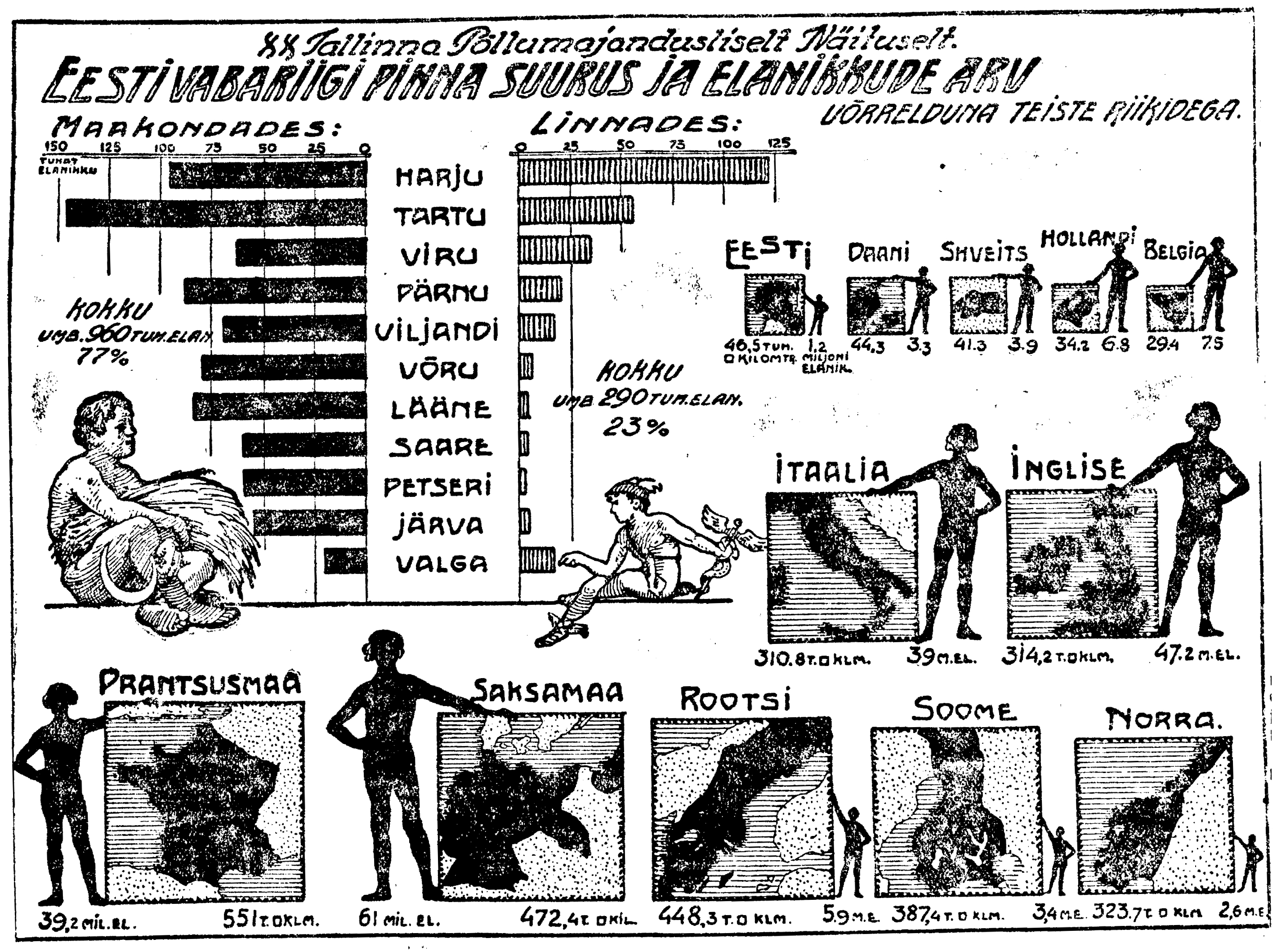 In the beginning of the activities of the SSCB when a stable publishing programme was yet to be developed, a wider audience was reached, for example, through fairs. The exhibited large graphical pieces became very popular and often (especially in years 1921–1922) were reproduced in newspapers, as was the case with this graph on areas and population numbers. Reproduction
For a data processing institution, it was first necessary to achieve a flow of incoming and outgoing information. To an extent, it was possible to put to use the existing staff and information flow from the statistical departments of ministries. Agreements were concluded with each ministry, which required plenty of negotiating, but the process was mostly completed by the end of the first year of work. Another success was building a significant network of agricultural correspondents, which comprised more than 1,400 people by the first autumn.
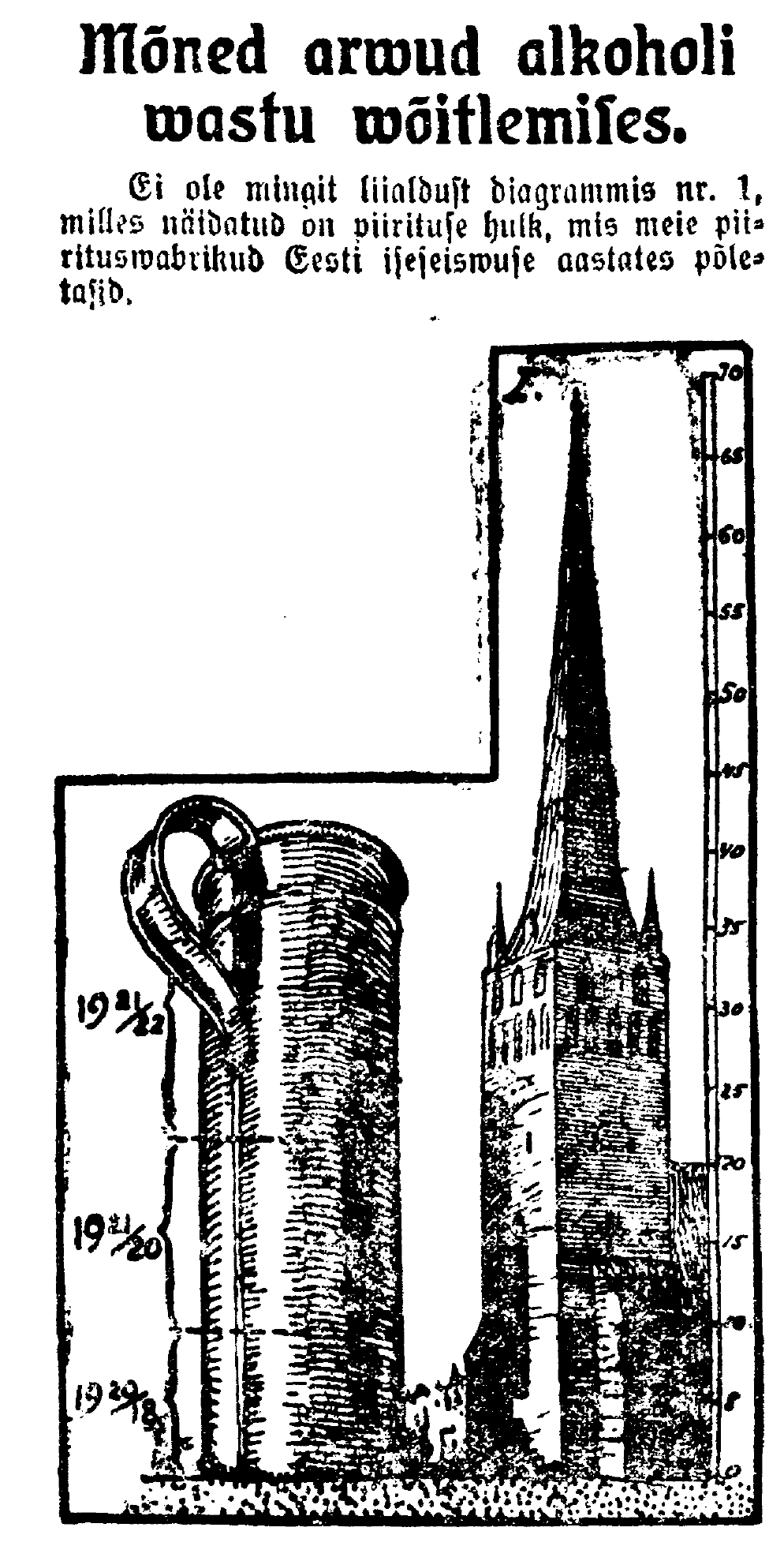 The printed media of the 1920s showed interest in statistics: the more expressive and graphic the presentation of numerical data, the better. Reproduction
The output data were published in 1921 in 15 small brochures on foreign trade, market prices, etc. These first-year brochures still bore the name of the department publishing the data, which shows that the integration of the departments was net yet finalised.
On the basis of the statistical departments of ministries, three SSCB departments were formed:
- general department (migration, health, education, employment, social care, “morality”, incl. crime, etc.);
- agricultural department (crop areas, harvest, losses, cattle, rental prices of land, wages of agricultural workers, etc.);
- economic department (foreign trade, industry, prices, finance and insurance, transport and communication, etc.).
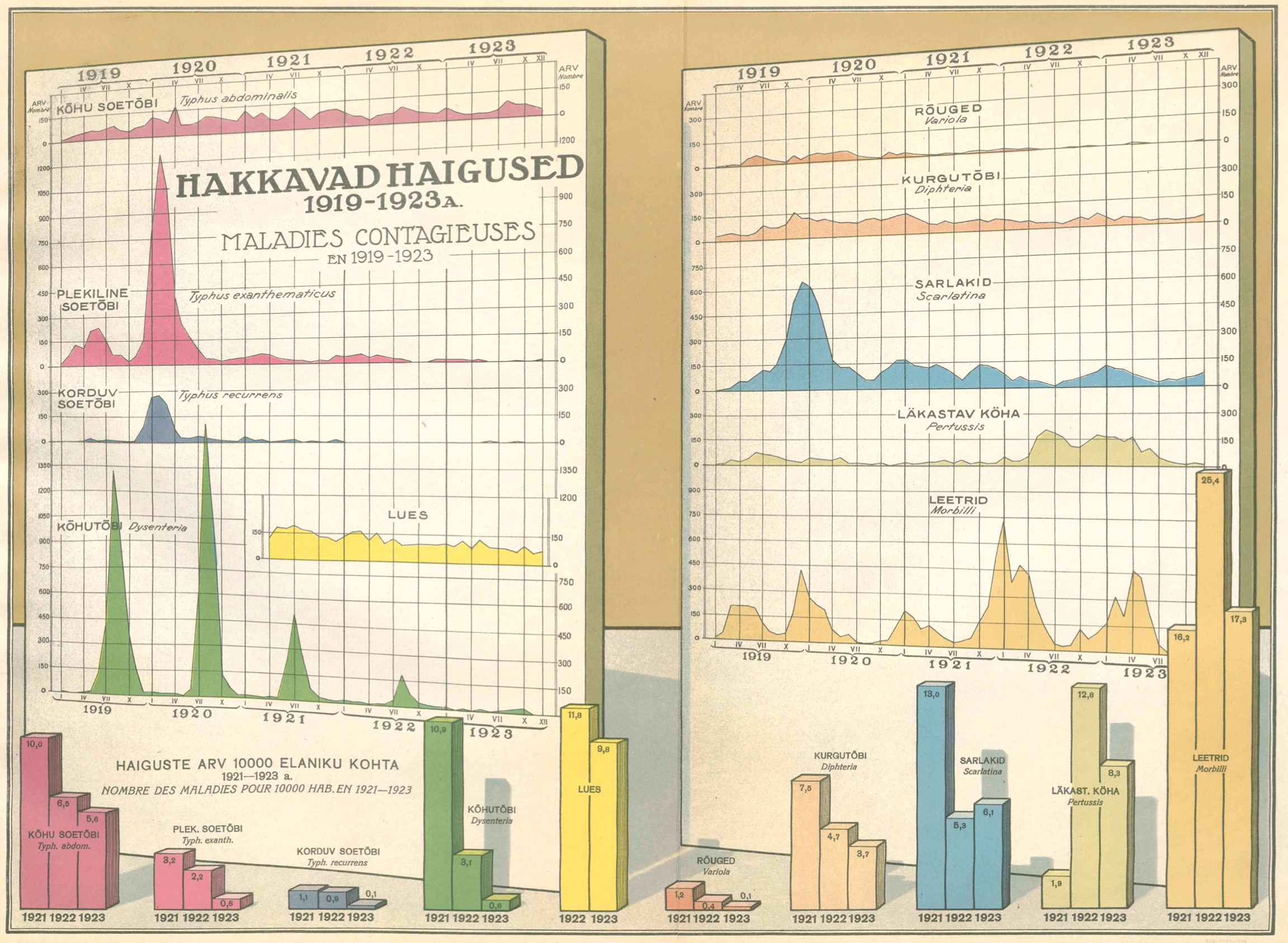
In addition to statistical departments, the SSCB included a graphics service. Among its many accomplishments, the true masterpieces were the two large-format, colourful and luxurious statistical albums published in 1925–1926. Reproduction
In May 1922, the Riigikogu approved these activities along with the statutes of the SSCB. At the same time, it also established the State Statistical Council to guide official statistics in the country.
1922 was also the year when the first census was conducted in the Republic of Estonia and the first regular periodical, the monthly bulletin Eesti Statistika Kuukiri was published. Following the search for substance and form in the initial years of the SSCB, its activities had become stable by mid-1920s. In the coming decades, until the end of the independence period, the work of the SSCB was characterised by high volume and quality.
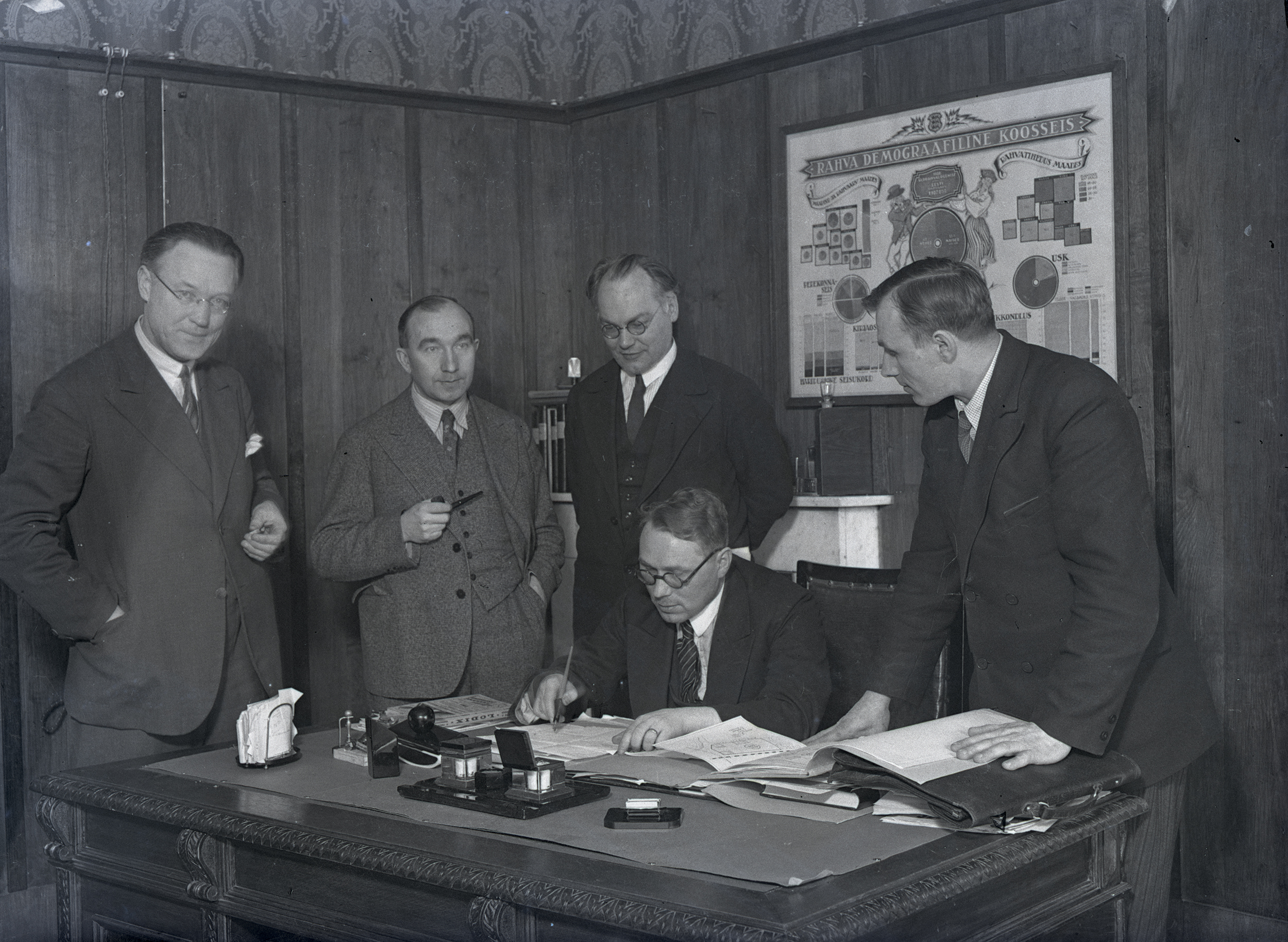
The SSCB had stable management – its founders and leaders were in office for all of the first independence period of Estonia. The photo shows Albert Pullerits, director of the SSCB (sitting); Anatol Tooms, deputy director (with a pipe) and Hugo Reiman, head of the general department (behind Pullerits), at the time of the second census of the Republic of Estonia in 1934. Photo: Tallinn City Museum