
Agricultural censuses
Author: Hiljar Tammela
A hundred years ago, the Republic of Estonia was an agrarian country where the majority of people made their living from agriculture. Agriculture was, therefore, the most important sector of the economy and accounted for a major share of foreign trade. More broadly, the state of agriculture had an impact on the stability of the society as a whole. It is not surprising then that one among the three departments formed under the State Statistical Central Bureau (SSCB) was dedicated to agricultural statistics. As the most common form of agriculture was production in small holdings, there were a lot of production units, and collecting information from these was very labour-intensive.
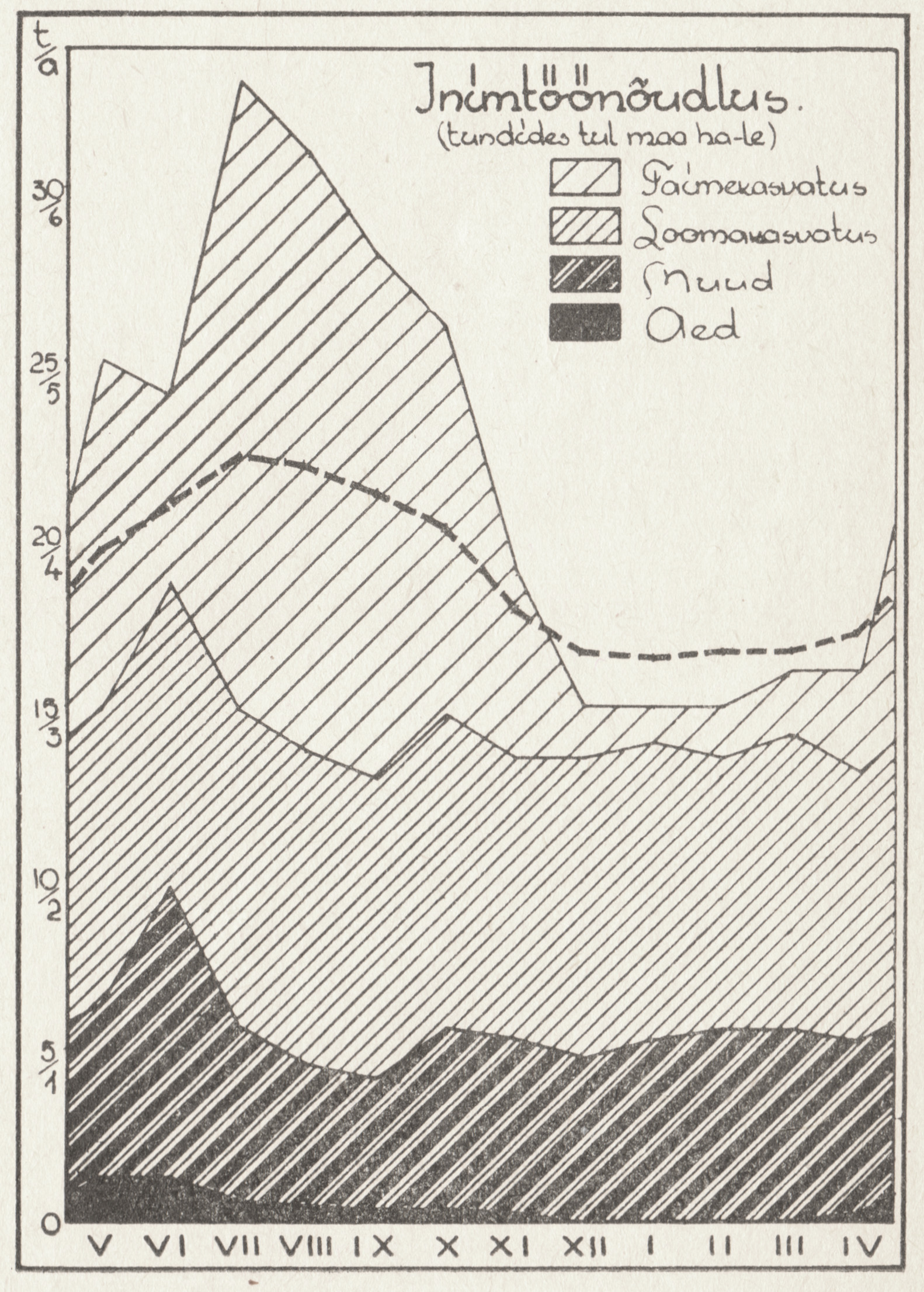
As agriculture was a very important sector for the Republic of Estonia, it was analysed to a great extent. In addition to agricultural censuses, different agricultural and economic research was carried out. The graph shows labour demand per hectare of profit-yielding land by month at the end of the 1930s. Reproduction
“The wealth and success of our farming nation depends mainly on harvest. /…/ Therefore, our first and foremost goal should be to do everything we can to increase the volume and quality of harvest,” declared SSCB in a brochure, which was published in its first months and was dedicated to explaining the need for a network of agricultural correspondents*. This small eight-page brochure promoted one of the many ambitious plans of the SSCB: to create a wide network of statistical correspondents in rural areas. This plan was also a success: in a few months, more than 1,400 energetic farmers across Estonia had joined the network. The correspondents were not paid, but the need for data and the willingness of active farmers to contribute was a great match. The farmers were given a free diary for surveys, where they could record the times, results, etc. of the more important farming work. Every now and then, they had to submit the records to the SSCB.
In a constantly changing economic environment, it was sometimes necessary to get a more comprehensive picture than the data received regularly from different resources could provide. This could only be achieved by an agricultural census. The first extensive surveys covering all farming households were conducted in the Republic of Estonia during the summers of 1919 and 1920, even before the SSCB was established. Their main goal was narrower: to determine the capacity of agriculture (sowing areas, number of cattle), which had suffered during the war years, in order to secure food for the country’s population. Therefore, there was no agreement later whether to consider these surveys as agricultural censuses or not.
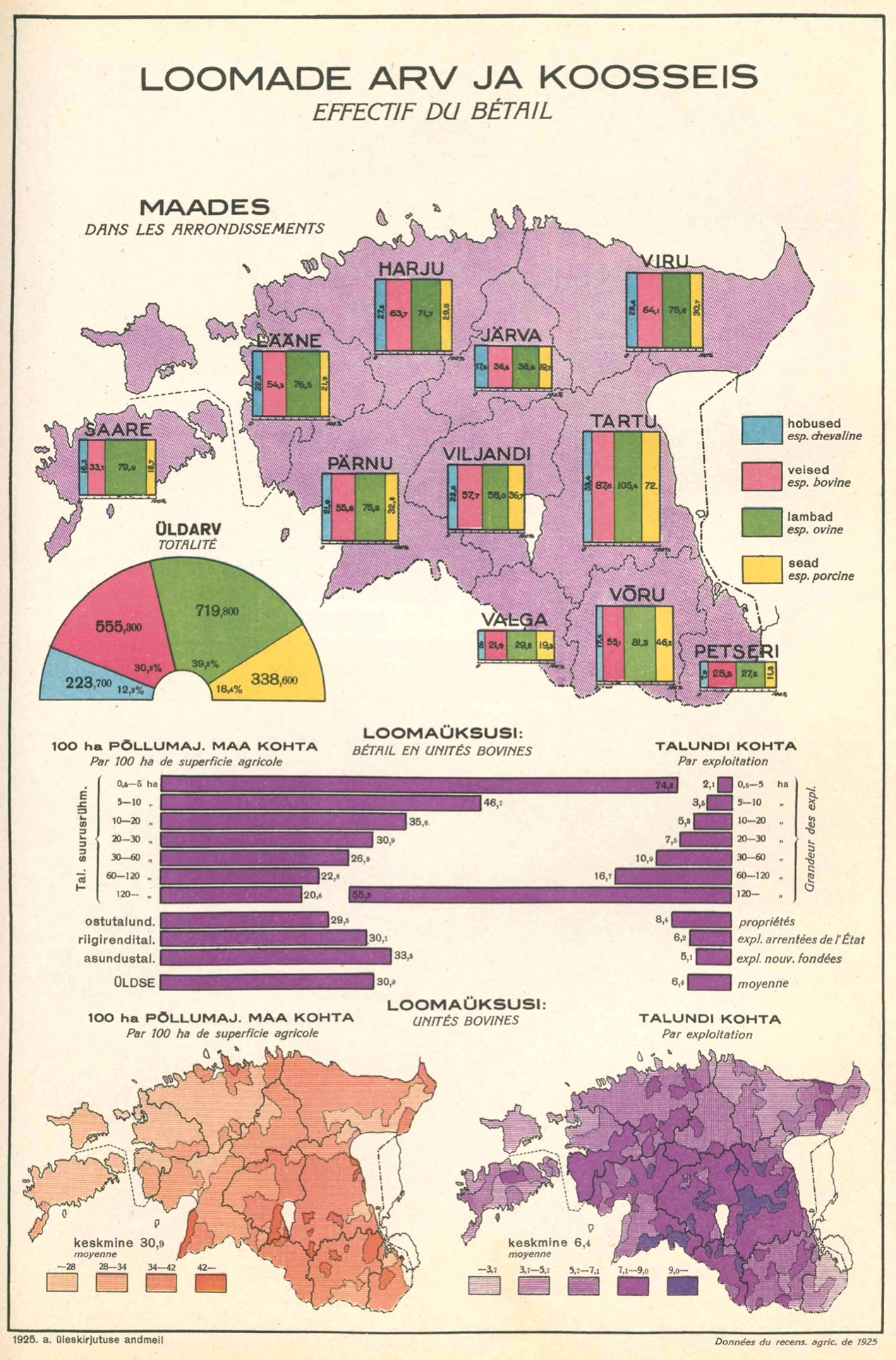
The first real agricultural census was conducted in Estonia in the summer of 1925. It took account of farms and their land, crop areas, cattle, farming tools and machinery. The SSCB’s plans had involved much more, but the government provided financing only for a census on the main issues.
Results of the 1925 agricultural census. Reproduction
The next census took place in 1929 in the full volume requested by the SSCB. It was organised in coordination with the International Agricultural Institute in Rome. It provided general guidelines for agricultural censuses, which were conducted in approximately 60 world countries in 1929–1930. The media of the time called it grandly the greatest research project in world history, which perhaps wasn’t even a great exaggeration. In addition to the main questions on land, agricultural area and cattle, which were already in the programme of the previous census, new questions concerned undertaken land improvement and used artificial fertilisers, population living on the farms, buildings and the estimated value of property. The third and last major agricultural census in the Republic of Estonia were organised along the same lines in 1939.
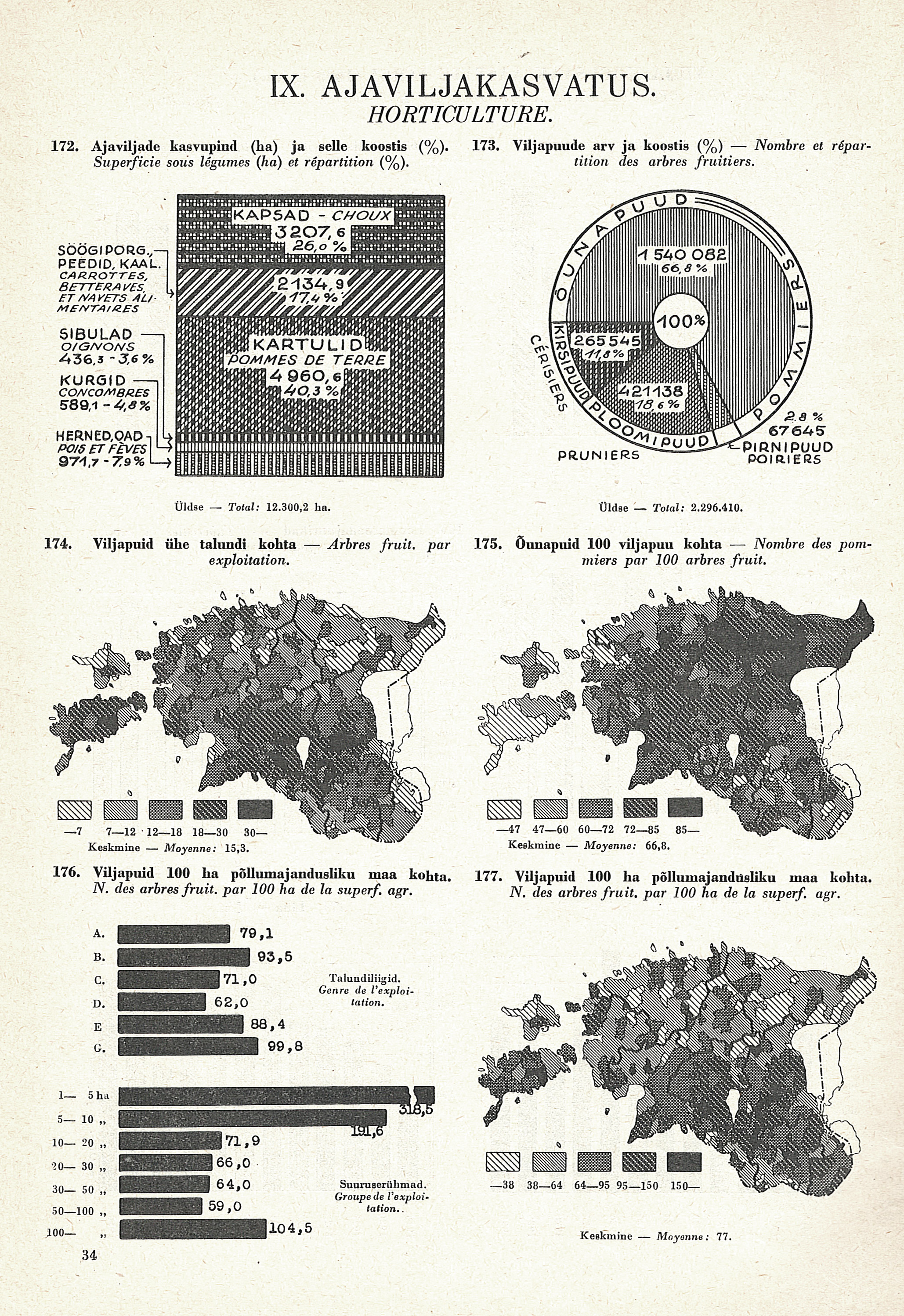 Results of the 1929 agricultural census. Reproduction
Organising an agricultural census could be compared to the other major statistical activity, the population census. However, as the number of surveyed objects was smaller in the agricultural census, the work was more specific (required in-depth knowledge of agriculture) and it was distributed over several weeks, it was not necessary to carry it out as a massive campaign. Both during the preparatory work (compiling lists of land units) and the census of farms, it was possible to use officials from county and rural municipality governments who knew local conditions well. In the agricultural census, approximately one and a half thousand temporary staff were doing the field work and received a small pay for it.
The information collected during the censuses was processed and published. In addition to aggregate data made available in publications, there were several analyses and single studies published on different agricultural aspects (in the periodical Eesti Statistika, etc.)
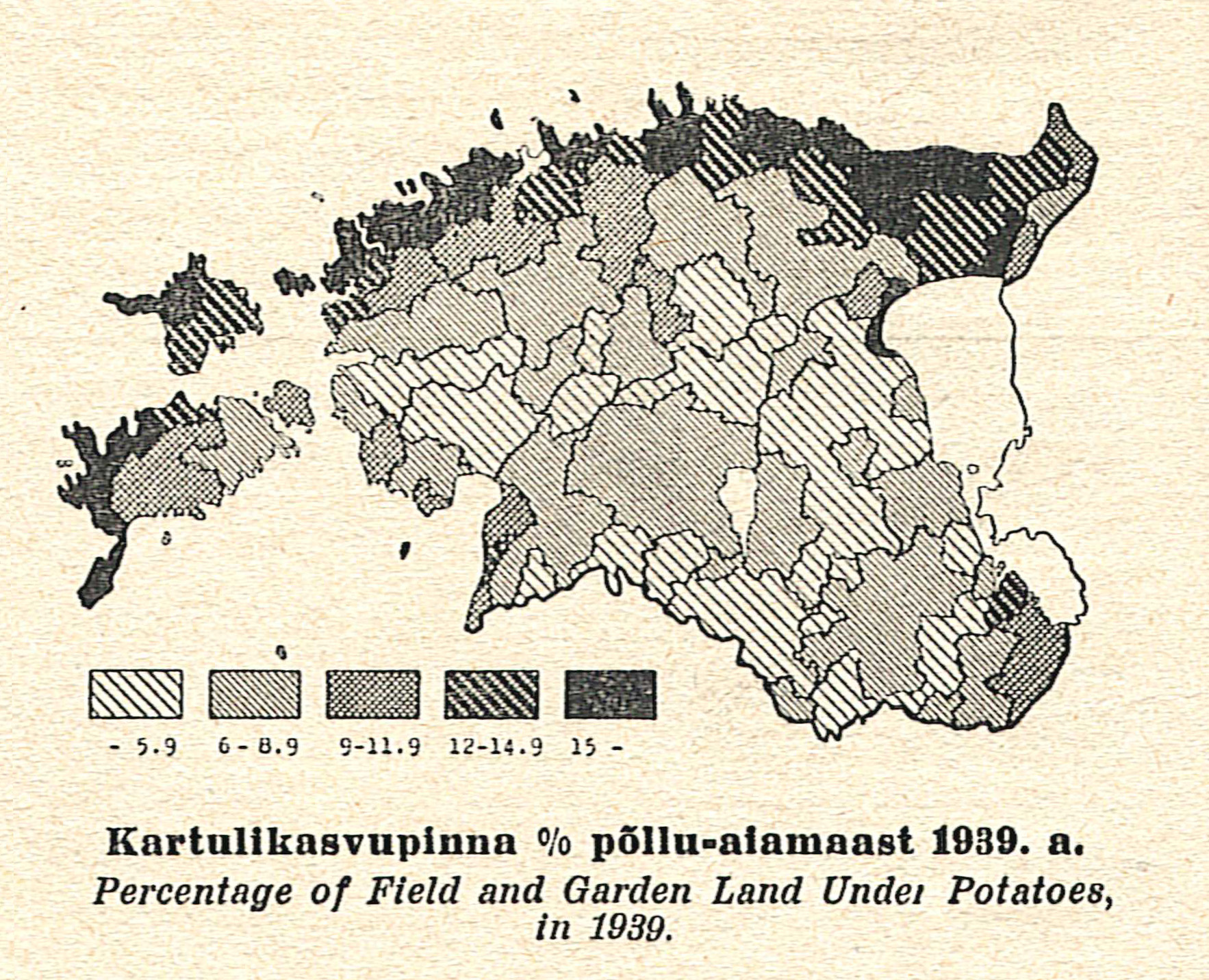 Results of the 1939 agricultural census. Reproduction
Thanks to this statistical activity, we have a great overview of the Estonian agriculture at its peak before the war and collectivization. At the end of the period of independence, in 1939, there were approximately 140,000 farm holdings in Estonia covering around 3.2 million hectares of land and proving a home to 630,000 people. On around 1.1 million hectares of agricultural land, mostly rye and oats were grown. Farm animals included 220,000 horses, 700,000 cattle, 420,000 pigs and 680,000 sheep.
Brochure title in Estonian: “Mis jaoks on vaja põllumajandusliste korrespondentide võrku?”