
1941 Census
Author: Olev Liivik
The census of 1941 could be considered a unique event in the history of Estonian statistics, as it was organised only three months after Germans occupied Tallinn and a big part of Estonia. Despite the quick organisation of the census, its results were of high quality and the collected data were reliable.
The census conducted during the German occupation has not usually been treated the same as the prior and later censuses. Its format was not that of a population census, but rather registration of people. In terms of the content, however, the census fully conformed to the population census criteria, although the census programme was slightly shorter and the questionnaire differed to some extent from other general population censuses in Estonia, which is probably related to the military and political situation of the time.
Organising a census in German-occupied areas was not uncommon. Nazi Germany conducted censuses in 1939 and 1940 also in areas seized from Poland, later in Ukraine as well as in Latvia and Lithuania. In Latvia, the first census took place on 1 August 1941, i.e. just about a month after Germans occupied their territory. Probably due to the rush and administrative incapability, the census was considered a failure, and it was organised again in the winter of 1943. In Lithuania, a census during the German occupation was conducted in 1942.
In Estonia, similarly to Latvia, the census was conducted with an extraordinarily short preparation time. Documented evidence starts with 15 October 1941 when the financial director of the Estonian Self-Administration, Alfred Wendt, issued a regulation on the registration of persons permanently living in Estonia, to be held on 16 November 1941.
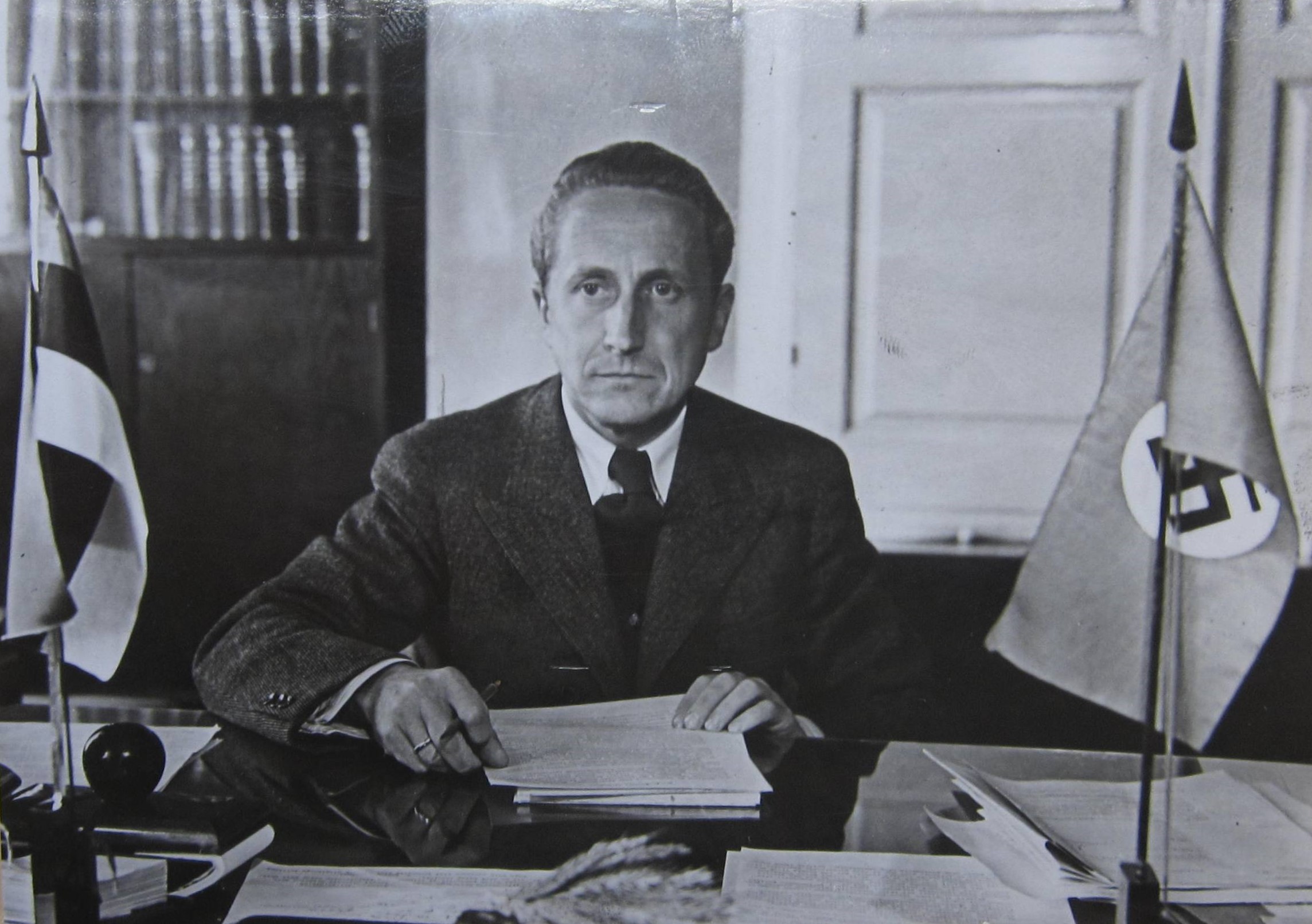
Alfred Wendt, the financial director of the Estonian Self-Administration, working in his office. Photo: National Archives
The organisation of the census was motivated by the need to find information about population decrease and about changes in the age-sex structure and territorial distribution of the population. In the military-economic sense it was first important to identify the economically active population, which was considered as the labour resource. Although the census was initiated without a doubt from Berlin, it was organised by the Estonian Statistical Administration using its own resources and taking into account the local possibilities and conditions. There were experienced and capable statisticians working at the statistical authority, which was headed by Albert Pullerits, the former director of the State Statistical Central Bureau.
Due to extraordinary conditions, it was necessary to change the registration time plan and, to some extent, the organisation. The census took place on 30 November and 1 December 1941. It did not cover the German military located in Estonia. Also these civilians were not enumerated who had come to Estonia from Germany “after the territory to be registered had been freed”. This meant among else that a large share of the officials of the German-appointed Estonian Self-Administration, including its head Hjalmar Mäe and Alfred Wendt were not enumerated. They had relocated to Germany in the winter of 1941 to escape the Bolsheviks, but returned home in the footsteps of the German military in the summer and autumn of 1941. Soviet prisoners of war on the Estonian territory were also not registered, while civilian detainees in houses of detention, prisons and concentration camps were covered in the census results. There were no forms filled in about them, rather the data were collected from the authorities. Permanent residents outside of Estonia (mainly men on military assignments) were enumerated basically in the same way under a special procedure. Their share in the Estonian population was under 2%.
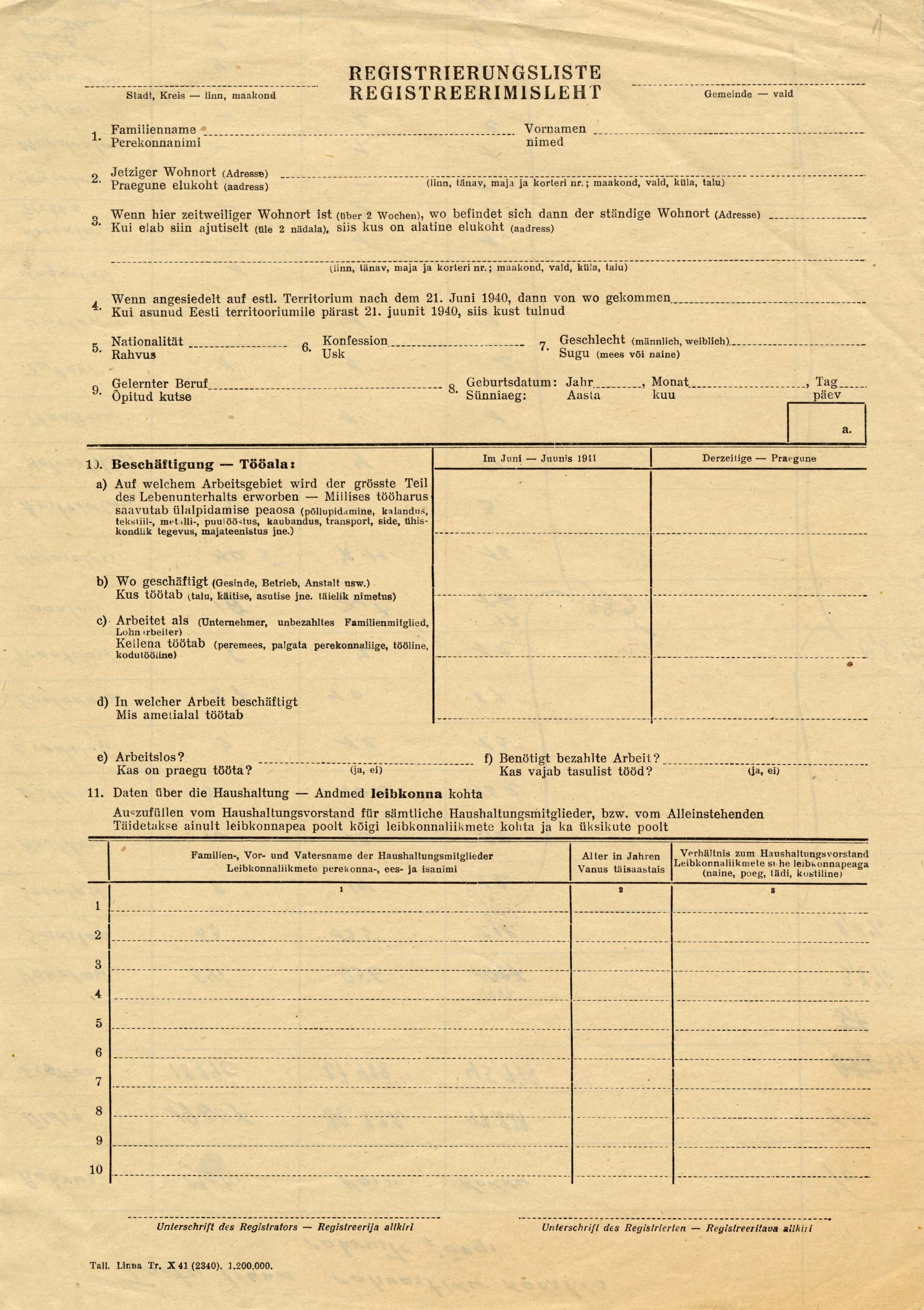 Census form
According to the census results, there were 1,017,811 persons (450,569 males and 567,242 females) living in Estonia. Compared to the independence period, the population had decreased by slightly more than 100,000 persons (the population calculation for 1 January 1940 was 1,122,075 persons). The decrease was to a great extent a result of mobilisation and evacuation to Russia, but some of it was likely due to the relocation of Germans, repressions by Russians and Germans and war casualties. On the other hand, the share of Estonians had increased: according to the census data, it was higher than ever before or later, i.e. more than 90%.
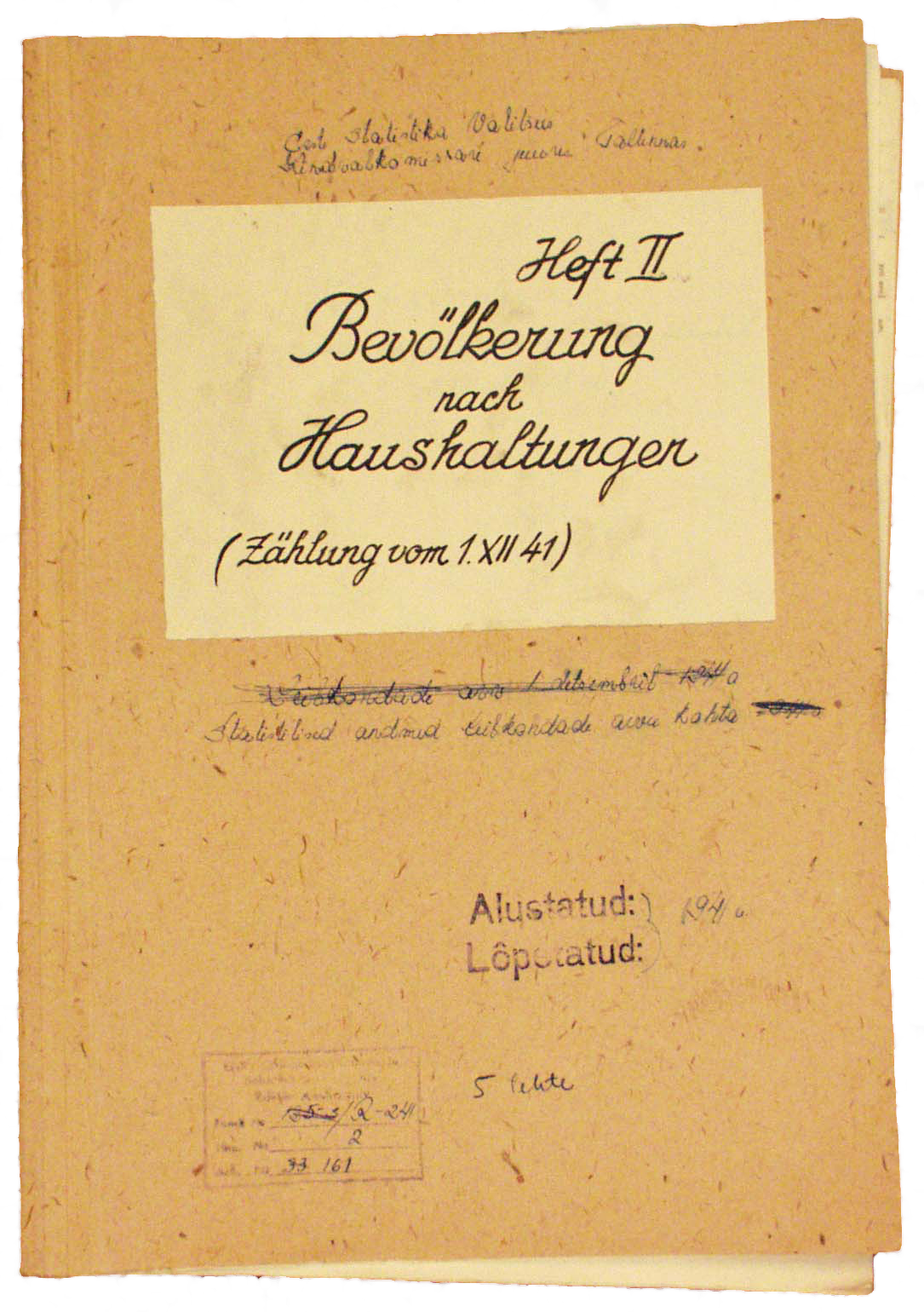
Census data on the number of households
Major changes had taken place in the sex-age distribution of the population. The decline in the birth rate during World War I had intensified. The population born around that time had entered their twenties. The population composition by sex was affected to a great extent by mobilisation. In the summer of 1941, men born from 1907 to 1922 were mobilised and 30,000 of them were taken outside Estonia. According to the data of the 1941 census, there were 80,065 men and 125,869 women aged 19–34; therefore, there were 45,904 fewer men.
Loading chart...