
1922 Census
Author: Hiljar Tammela
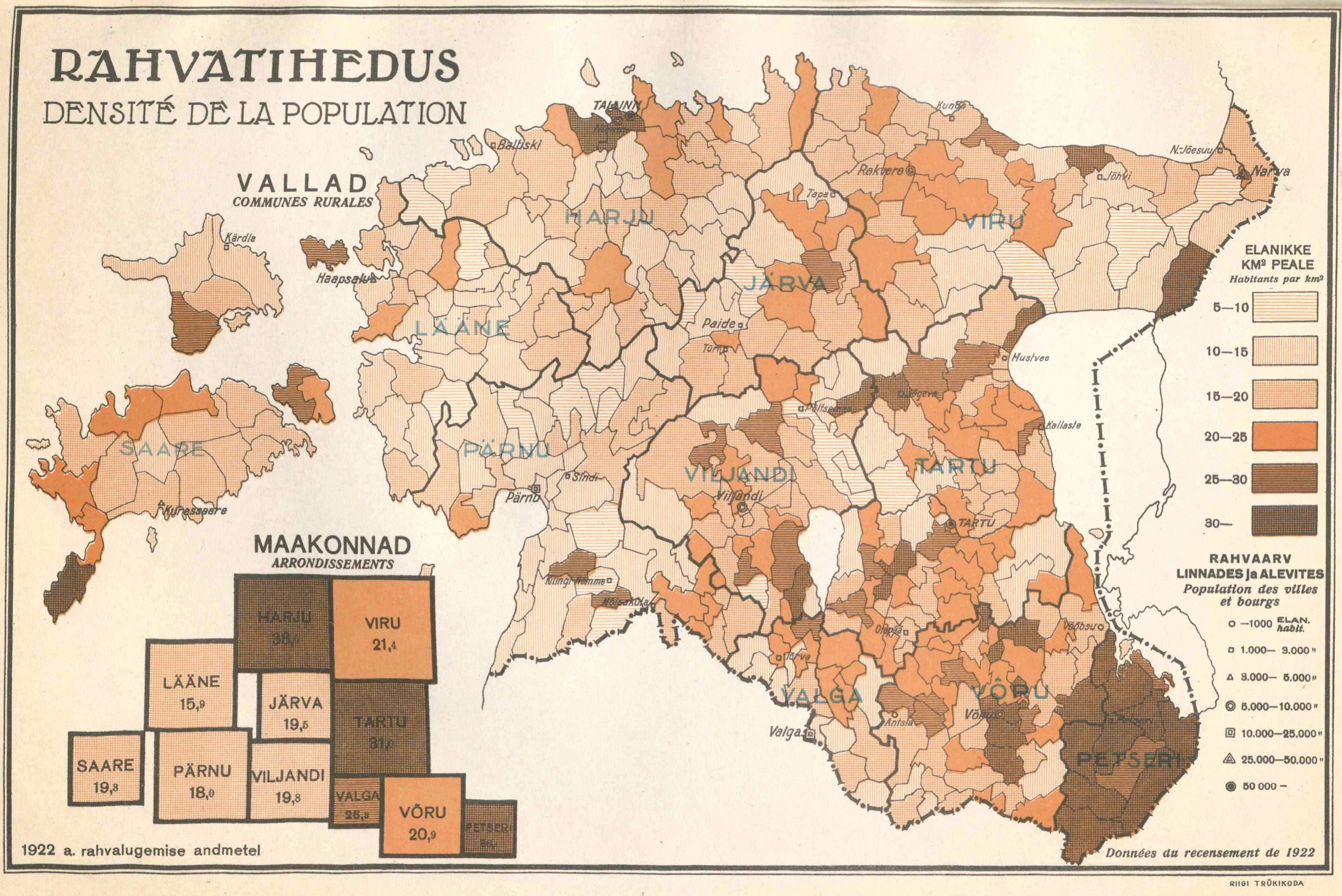
At the beginning of the 20th century when, unlike nowadays, there were no electronic registers to be used for calculating the population size, a census survey covering the whole population was probably the biggest and most complicated task among the activities of a statistical authority. The newly established State Statistical Central Bureau (SSCB) faced this challenge in its second year: the first census in the Republic of Estonia took place at the end of December 1922. Preparations for conducting the census had, however, started almost immediately following the creation of the SSCB.
What contributed to the success of this gigantic project was generous support by the government and the public, which was based on understanding the necessity of the census. For example, the newspaper Tallinna Teataja supported census preparations: “The need for a census is enormous /…/ It is clearly necessary to determine how many people live in the towns, counties and rural municipalities of the new Estonia. Without these data, it is not possible to implement the numerous plans of the newly founded state.” During the quarter of the century since the last population census, many wars and migration waves had swept through Estonian territory, which meant that there was no agreement about the population number: estimates ranged from 1.1–1.75 million.
A more definite plan for the population census was made after consultations with state officials, researchers and municipal authorities as well as with colleagues in other countries. A government regulation set the census moment to 00:00 on 28 December 1922. A Census Committee was formed. The territory of Estonia was divided into 21 census districts, consisting of counties and larger towns. As part of the preparation work, local municipalities mapped all known residential dwellings, which were then were divided between 15,000 registrars into divisions. It was estimated that each registrar should visit 60–70 homes. Instructors worked under district supervisors: there was one instructor in each rural municipality and small town, several in towns. There were also three-member rural municipality and small town committees in rural areas. Their task was to train the registrars and help them in their work, promote the census more widely, etc. During the peak time, there were more than 16,000 people involved in census work.
The census questionnaire was detailed and not too different from the ones used nowadays in population and housing censuses. The approximately 50 questions concerned individuals, their households as well as living conditions. There were three main census documents used: personal form (for each person), apartment form (for dwelling and household) and building envelope (where completed census documents for the whole building were collected). The printing of the incredible volume of a several million pages (census forms, instructional materials, etc.) was completed in late autumn, at the same time when the census staff were trained.
It was decided to conduct the census between Christmas and the New Year, as it was traditionally a time of holiday between periods of hard work and relatively more people would be at home. Registrars visited all residences for the first time on December 26–27. On December 28–29, they came for a follow-up and to register possible changes.
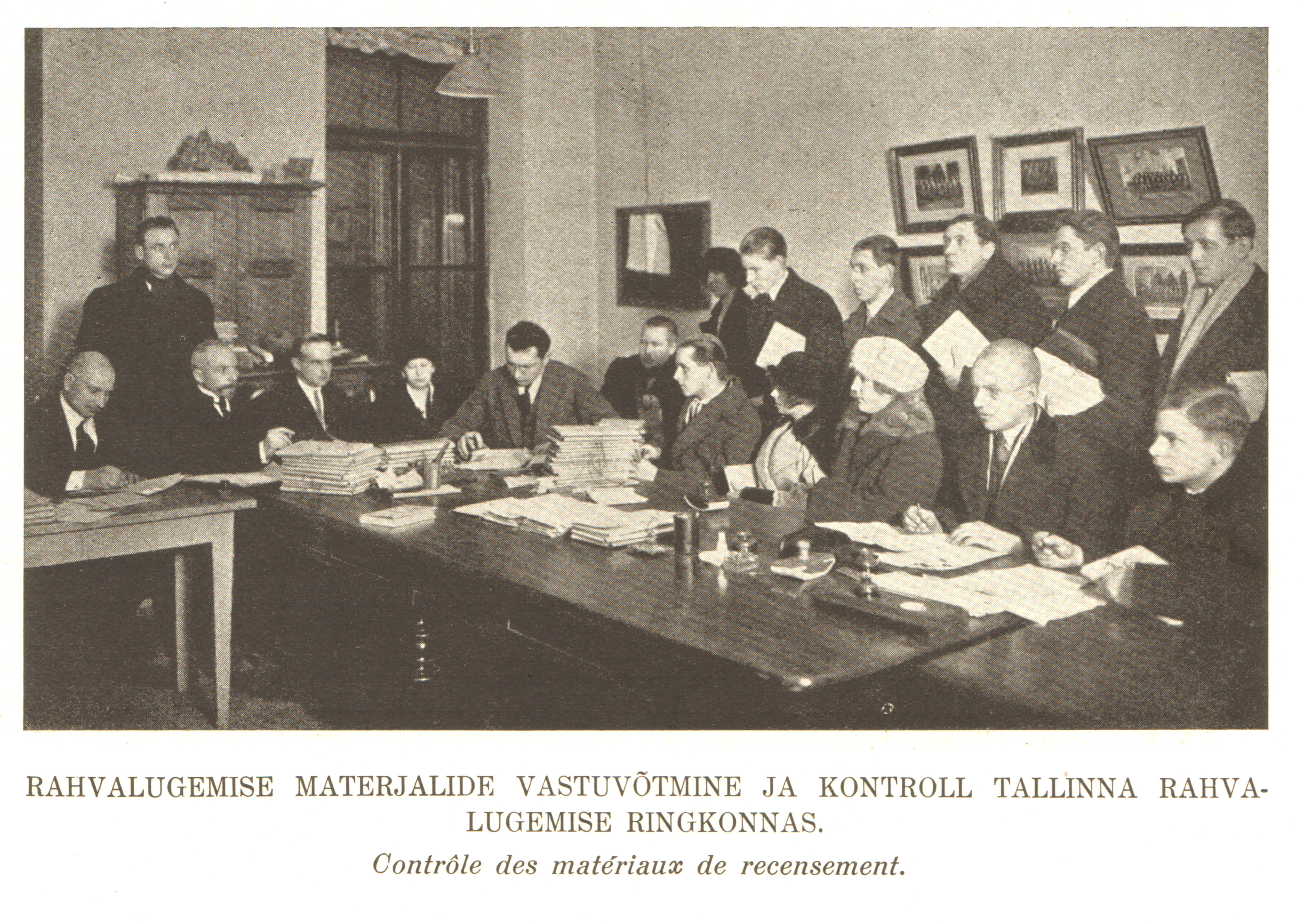 Receiving census materials at the beginning of 1923. Reproduction
Instructors did an overall check of the work and sent all the collected materials with the preliminary calculation results to the SSCB. This made it possible to publish brochures with the preliminary census data as soon as in February 1923. The census showed a small growth in the population of Estonia. Compared to the previous census 25 years earlier, the share of females had increased in the population (due to war losses) and the relative share of Estonians and urban dwellers had grown.
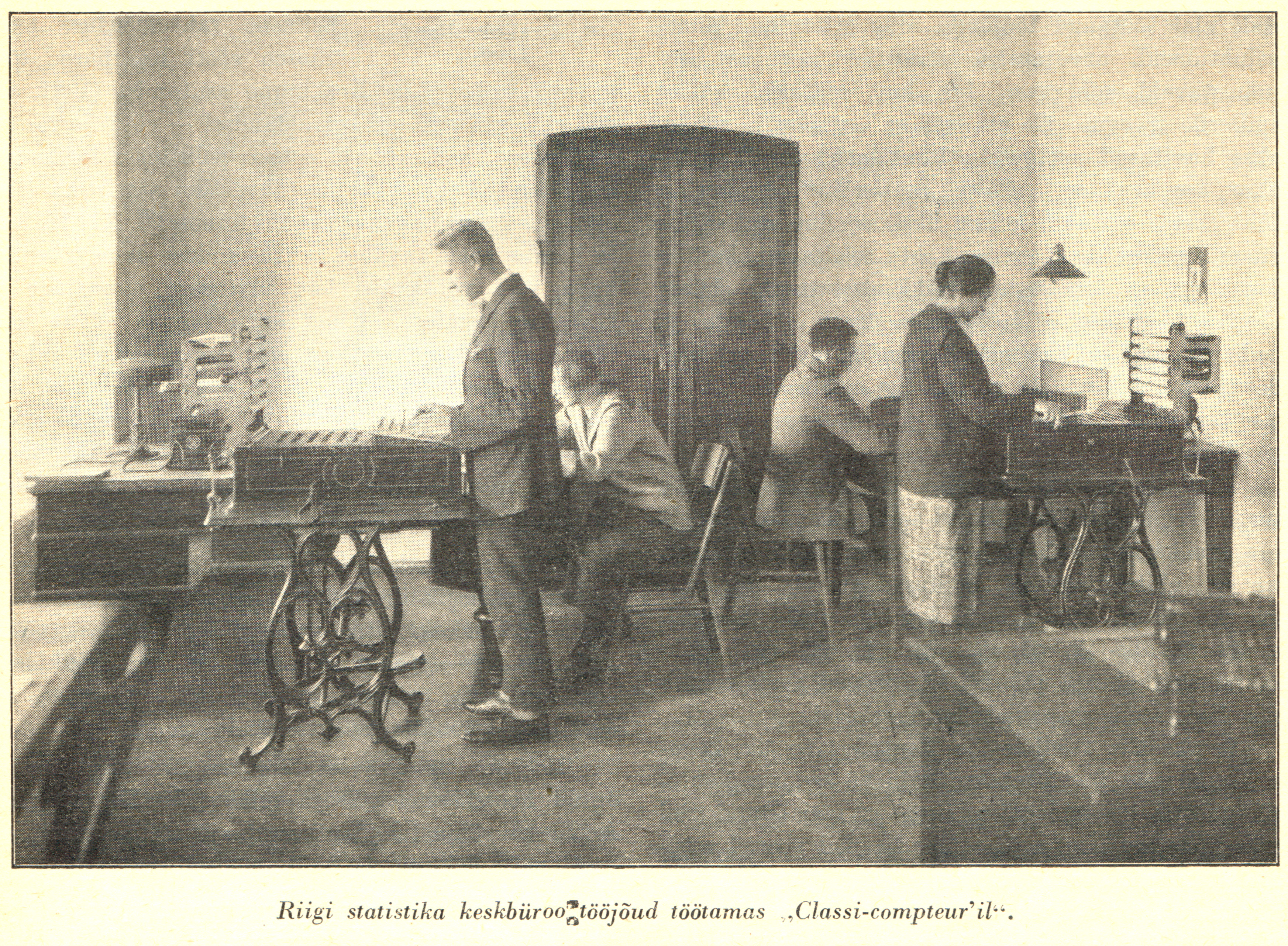 Two people worked on a mechanical computer: one read out the data on the census form, the other adjusted the switches according to the data, and the dataset was transferred into the machine’s memory. After this, the machine produced a frequency table as a printout. Reproduction
After the preliminary summaries, the collected data went through a more thorough processing. For this, two mechanical analogue computers were ordered from France, which were operated in several shifts almost around the clock. For the post-processing of census materials, a couple of dozen people were temporarily hired. The work was effective – the first volume with detailed information was published as soon as in the autumn of 1923. At the time of making conclusions, the SSCB could be happy with the quick and precise work, as the numbers matched up.
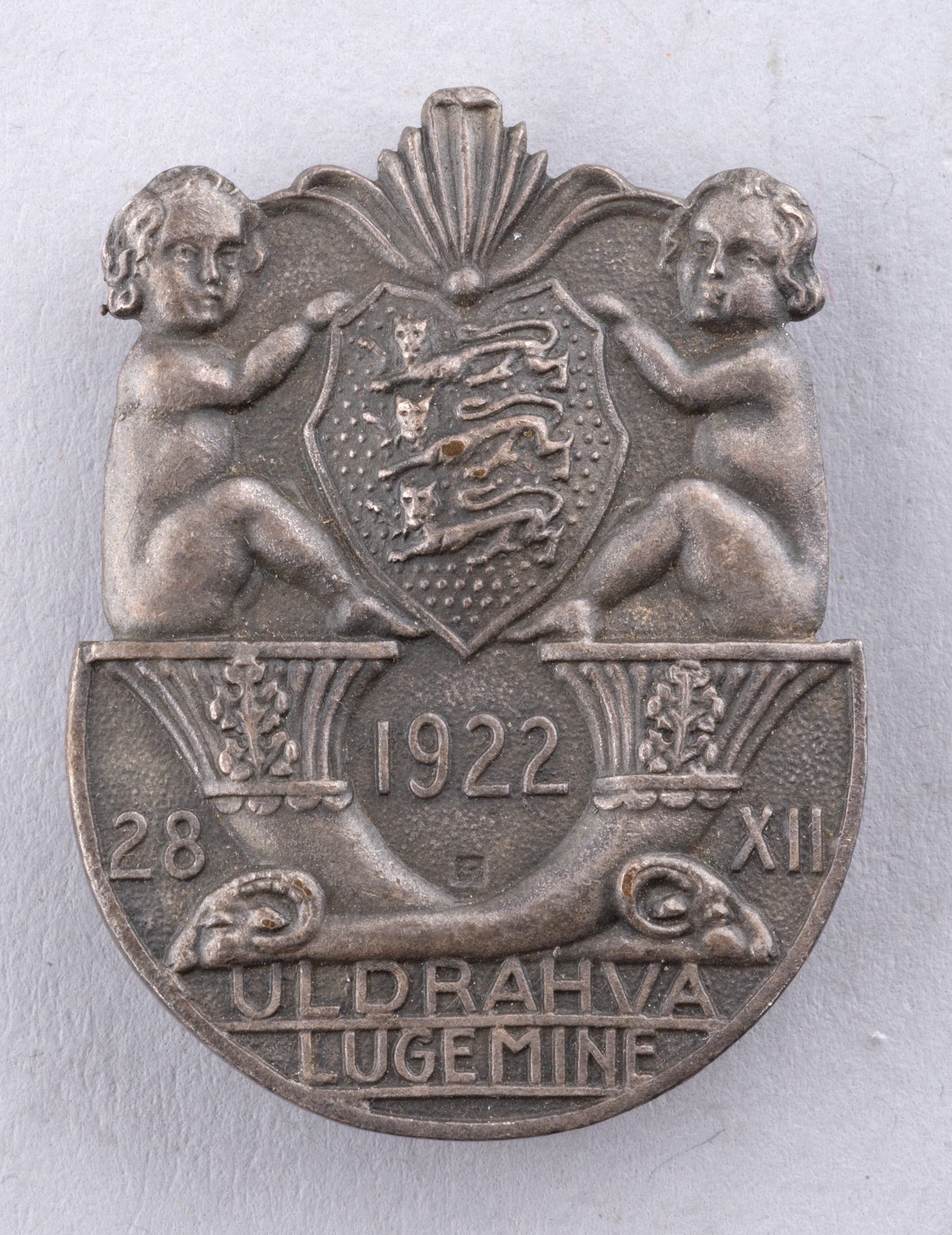 Those who participated in the organisation of the census (committee members, district supervisors, instructors, etc.) received pay, but enumerators worked without payment. As a sign of gratitude, all who contributed (16,000 people) received a silver commemorative medal. The author of the badge, which depicts children sitting on the horns of plenty, was artist August Kilgas. The lowest bid for manufacturing the medals came from a French enterprise. The medals, received from France, were given out at the end of the summer of 1923. Photo: Tartu City History Museums
High-quality work also required major financial resources. The Riigikogu allocated more than 30 million marks from several annual budgets, a sum that was comparable to the normal operating costs during the same period. In the end, the financing was cut and, as a result, the publishing plan was reduced. Nevertheless, there were 12 volumes published: nine on regional and three on general statistics.
There was great interest in census data, which were widely used for analysing social conditions. Reproduction
The next census was planned for 1930, but it was postponed due to a lack of resources during the global financial crisis. In the end, it took place in 1934 and was also considered a success.
Loading chart...